

 Billy Bagus
 Jan 07, 2026
Long before Ubud became Bali’s cultural capital, its story began quietly in a river valley where spiritual power, healing plants, and sacred geography converged. At the meeting point of two ancient rivers stands Pura Gunung Lebah, a temple whose origins are inseparable from the birth of Ubud itself. It is considered a spiritual foundation from which a settlement, a philosophy, and a way of life emerged. Read on to explore how this sacred valley shaped Bali’s most influential cultural landscape.
It is considered a spiritual foundation from which a settlement, a philosophy, and a way of life emerged
The Sacred Valley That Gave Ubud Its Timeless Name
Pura Gunung Lebah is located at Campuhan, the confluence where Tukad Yeh Wos Kiwa and Tukad Yeh Wos Tengen meet. In ancient Balinese belief, the meeting of two rivers is a place of immense spiritual potency. These waters nourished a fertile valley once abundant with medicinal plants used for healing and ritual purposes.
Ancient texts, including the Lontar Markandeya Purana, describe this area using the term usadi, meaning medicinal plants. Usadi evolved linguistically into usada and later ubad, a word associated with healing. From this term emerged the name Ubud. The settlement that grew around this sacred valley was defined not by royal power or trade, but by healing, spirituality, and harmony with nature.
Rsi Markandeya and the Spiritual Birth of Ubud
The origins of Pura Gunung Lebah date back to the eighth century, when the revered Hindu sage Rsi Markandeya arrived in Bali during his spiritual journey from India. According to tradition, he was instrumental in establishing Hindu worship on the island, including the founding of Pura Besakih and the early settlement of Taro.
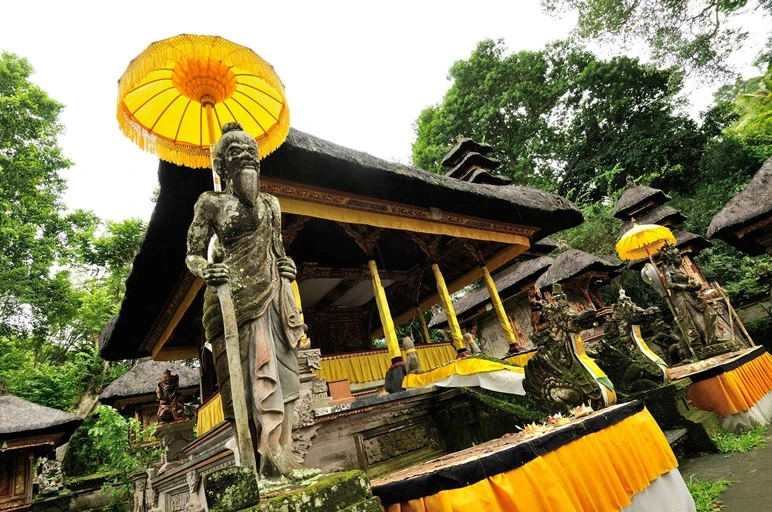
When Rsi Markandeya reached the Campuhan valley, he sensed an extraordinary spiritual presence. Flanked by flowing rivers and a narrow ridge running north to south, the location was chosen as a meditation site. It was here that he sought spiritual unity with Ida Sang Hyang Widhi Wasa, aiming for inner liberation and clarity. The temple was later established to anchor this sacred energy, marking the spiritual beginning of what would become Ubud.
Architectural Order and Sacred Space
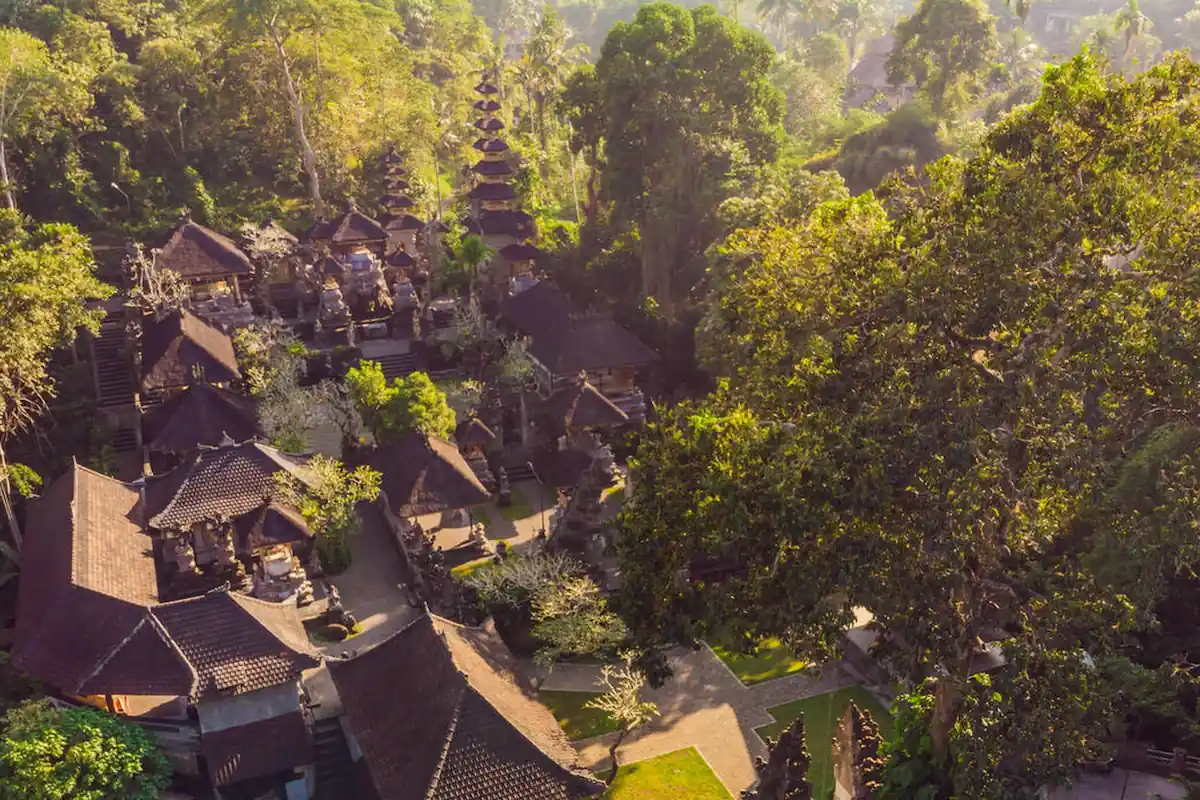
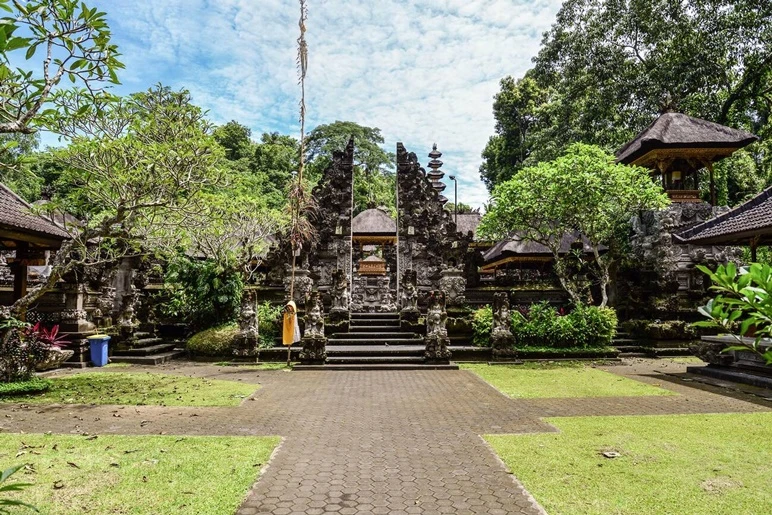
Pura Gunung Lebah follows the classical Balinese tri mandala structure. The outer courtyard, Nista Mandala, serves as a transitional space. The middle courtyard, Madya Mandala, separates the outer world from the sacred core. The innermost area, Utama Mandala, is the most sanctified space, reserved for prayer and offerings. Surrounded by dense vegetation and river sounds, the architecture feels organically bound to its environment, reinforcing the temple’s role as a place of meditation and balance.
Legends, Rituals, and Living Faith
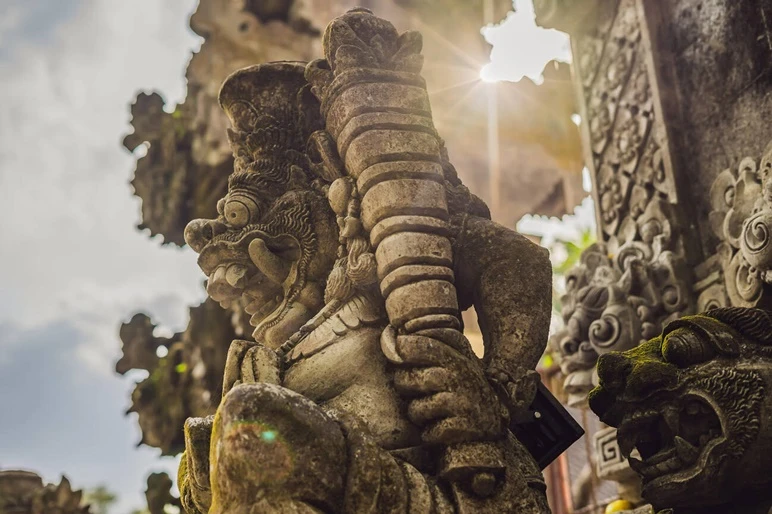
Local oral traditions speak of two giants who once lived in caves near Tukad Yeh Wos Kiwa and disrupted sacred ceremonies by preying on villagers. Their defeat, still remembered through physical landmarks like caves and stone relics, adds a mythic layer to the temple’s history and reinforces the area’s perceived spiritual power.
A Temple Defined by Landscape and Meaning
The name Pura Gunung Lebah reflects its rare geography. Gunung refers to a hill, while lebah means valley. Unlike most Balinese temples, which are built on elevated ground symbolizing closeness to the divine, Pura Gunung Lebah rests within a river valley. This makes it a striking exception in Balinese temple architecture. Despite its lower position, the temple maintains its sacred orientation toward Gunung Batur. Dewi Danu, the goddess of water and fertility associated with Mount Batur, is worshipped here as a manifestation of the supreme divine. The setting reinforces the belief that spiritual power flows through water, land, and direction.
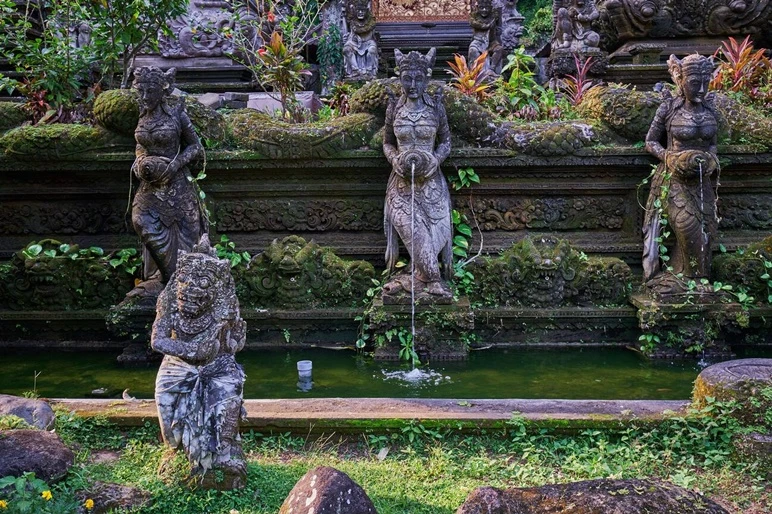
Today, Pura Gunung Lebah remains an active religious site. Ceremonies, temple anniversaries, and ritual dances continue to animate the space. Visitors often describe the atmosphere as deeply calm, making it a natural place for reflection and self healing. It steadfastly stands as the spiritual source of Ubud, a reminder that Bali’s cultural heart was born from a sacred valley where faith, sanctity, and nature became one.