

 Billy Bagus
 Dec 02, 2025
Nestled between two enormous banyan trees, Pura Luhur Mekori carries stories of dragons locked in conflict, vanished dancers, and a cursed village that was reborn. Every detail of this sacred site offers layers of meaning, inviting visitors to witness the intersection of history, legend, and spirituality. Read on to uncover the full story behind Pura Luhur Mekori and its enduring mystique.
Pura Luhur Mekori carries stories of dragons locked in conflict, vanished dancers, and a cursed village that was reborn
The Walled Sacred Shrine
The name “Mekori” derives from the word kori, meaning a gate or walled shrine, with the prefix me, implying “to be gaped” or “to take the form of a gate.” At first glance, the temple appears modest. Yet local tradition holds that some spiritually gifted individuals once saw its gate gleaming as if made of gold, earning the alternate name Mas Kori.
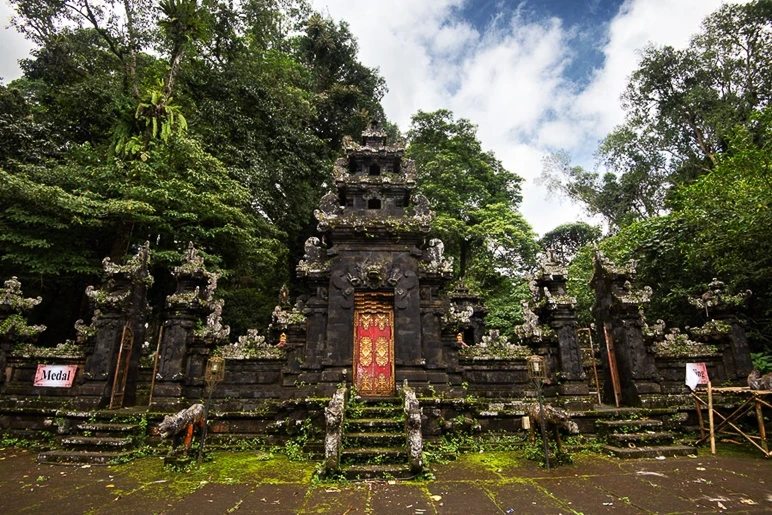
The two giant banyan trees flanking the entrance are more than decorative. Locals consider them guardians, protecting the temple from malevolent forces and preserving its sanctity. They frame the temple, giving it a mystical aura that signals the spiritual journey awaiting those who enter.
The Legend of Two 'Nagas'
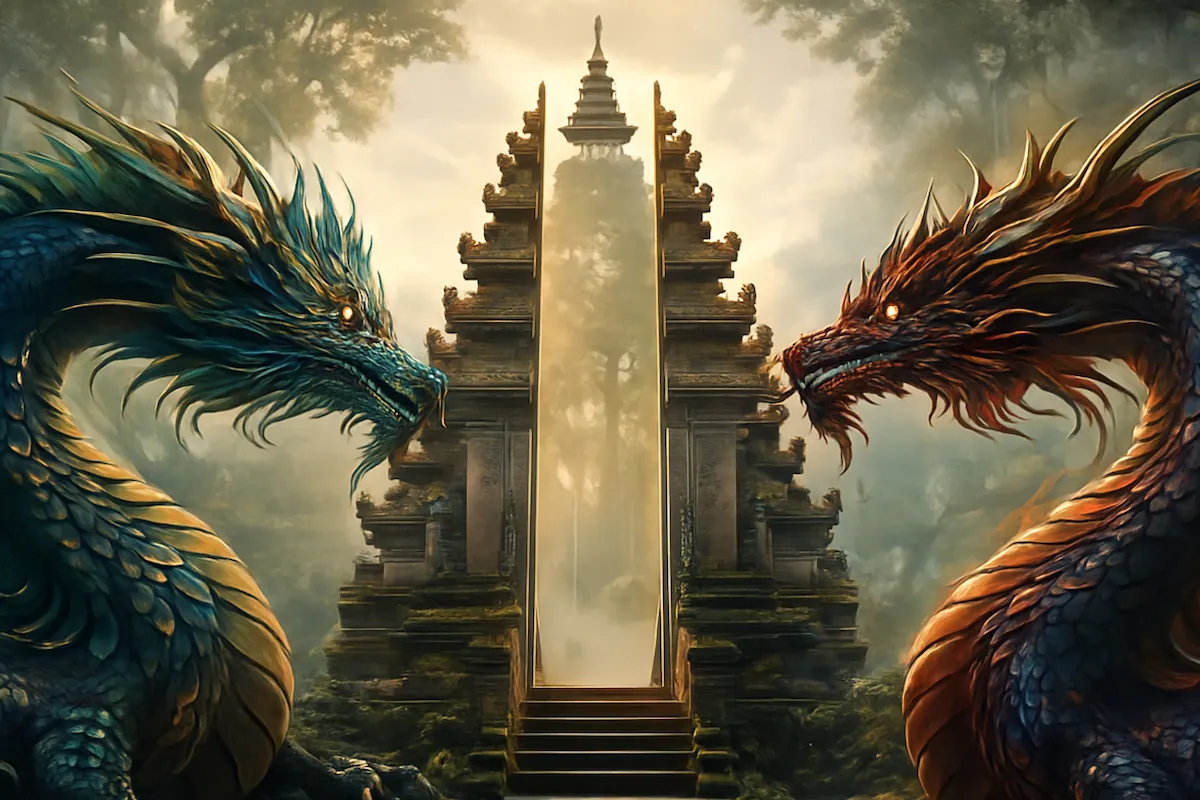
Central to Pura Luhur Mekori is the tale of two dragons: Naga Rarik and Naga Gombang, a story that intertwines family, betrayal, and supernatural transformation. Long ago, in the small village of Kentel Gumi, a mother lost her axe in the forest. She promised the finder would become her child’s companion, unaware that the axe was retrieved by a massive serpent. This union, under magical influence, led to the birth of children destined for extraordinary fates.
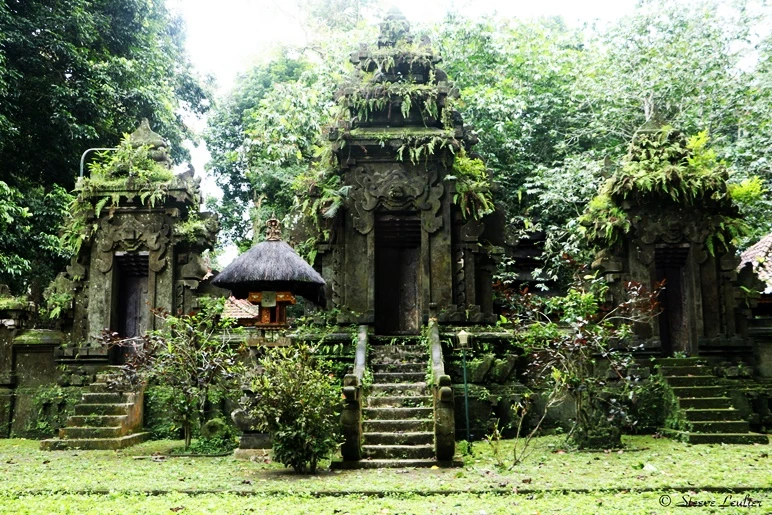
One son, after consuming a mystical egg, transformed into a half-serpent being known as Naga Rarik. His mother was expelled, and the son grew to embrace his supernatural powers. Fueled by vengeance, Naga Rarik confronted Naga Gombang in a battle that shook the natural and spiritual world. With the aid of his sister, Ayu Mas Sari, Naga Rarik emerged victorious.
Journey to Puser Jagat and Moksha
Following the battle, Naga Rarik and Ayu Mas Sari embarked on a journey to Puser Jagat, believed to be the center of the universe. Guided by spiritual instructions from their father’s meditative practices, they traversed dense forests, rivers, and remote villages.
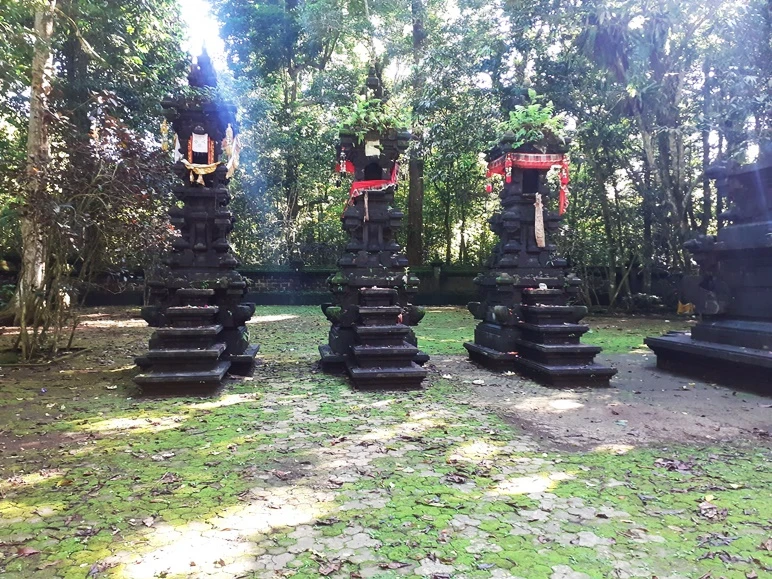
At a bustling market, Naga Rarik felt the cosmic pull that marked their arrival at the sacred site. He entered the underworld realms, Sapta Petala, achieving moksha, leaving behind a sacred void. Ayu Mas Sari performed her own meditation above this site and attained moksha as well. From their union with the divine, the Soka Bang tree, with vivid orange flowers, grew and became a symbol of devotion, sacrifice, and spiritual transformation at the temple’s main courtyard.
The Mekori Village Curse and the Rise of Belimbing
Pura Luhur Mekori’s history is also entwined with a dramatic tale of human and supernatural interaction. Villagers once witnessed dancers from the Rejang Renteng tradition vanish during rituals. Investigations revealed that a pair of cannibalistic giants had been abducting the last dancers. In the ensuing conflict, the giants were killed, and before dying, the male giant cursed the village with fiery destruction.
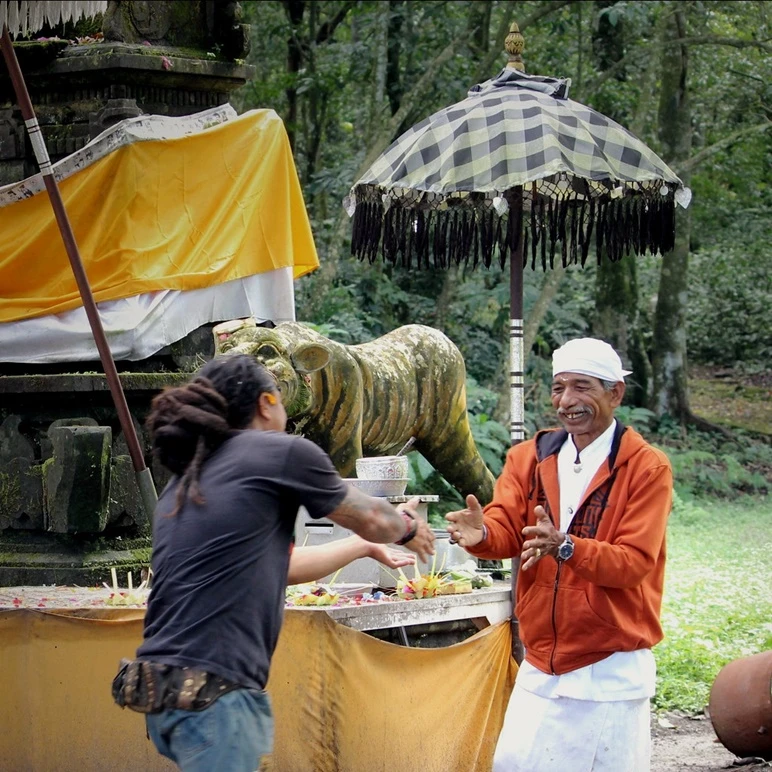
The village of Mekori was reduced to ruins and left uninhabited until the Pasek Tohjiwa community resettled the area, renaming it Belimbing due to its lush landscape shaped like the fruit. Today, Desa Belimbing thrives as a serene destination for both spiritual pilgrims and curious travelers.
Remnants of Spiritual Heritage
Pura Luhur Mekori remains a living monument to Bali’s layered spiritual and cultural history. Its sacred trees, golden gate, and the Soka Bang flowers are daily reminders of devotion, sacrifice, and mythic ancestry. Visitors are not just spectators but witnesses to a spiritual narrative that stretches from human experience to cosmic order.
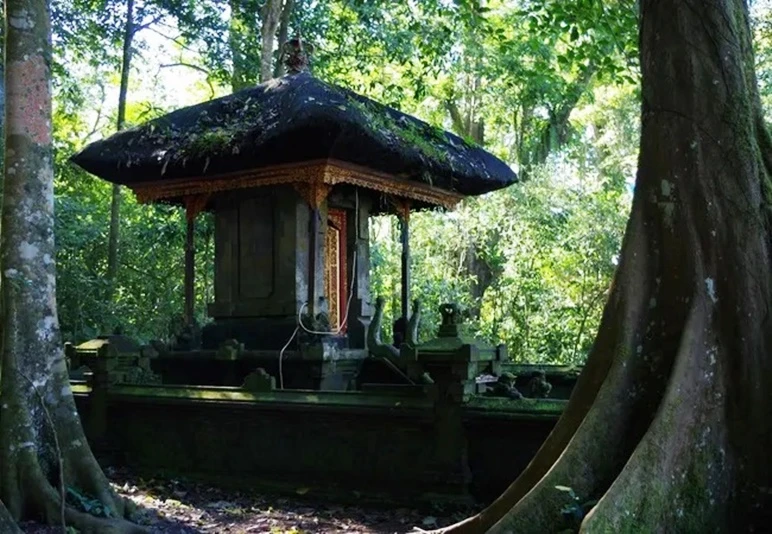
For travelers seeking more than visual beauty, Pura Luhur Mekori offers an immersive journey into Bali’s mystical heart. Every corner tells a story, every ritual reflects a timeless tradition, and every visitor becomes part of the dance of the dragon.