

 Billy Bagus
 Jan 26, 2026
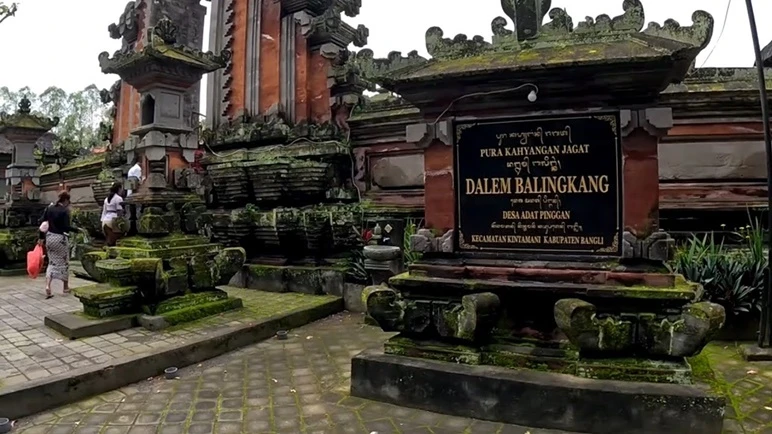
Hidden in the cool highlands of Kintamani, Pura Dalem Balingkang stands apart from most temples in Bali. This is not only a sacred site of worship, but a living archive of cultural dialogue, royal history, and spiritual coexistence that continues to shape Balinese identity today. Often overlooked by visitors rushing toward volcanic viewpoints, the temple rewards those who pause with a story that feels both deeply local and quietly global. Read on to uncover why this temple matters, how it came to be, and why its presence still resonates in modern Bali.
Often overlooked by visitors rushing toward volcanic viewpoints, the temple rewards those who pause with a story that feels both deeply local and quietly global.
A Temple Born from a Royal Union
Pura Dalem Balingkang is inseparable from the legend and history of King Jaya Pangus, a Balinese ruler whose reign is remembered for forging connections beyond the island. According to long-preserved local narratives, the king married a Chinese woman known in Balinese tradition as Kang Cing Wie. Their union was more than personal. It symbolized political alliance, cultural exchange, and spiritual adaptation at a time when Bali was opening itself to outside influence without losing its core beliefs.
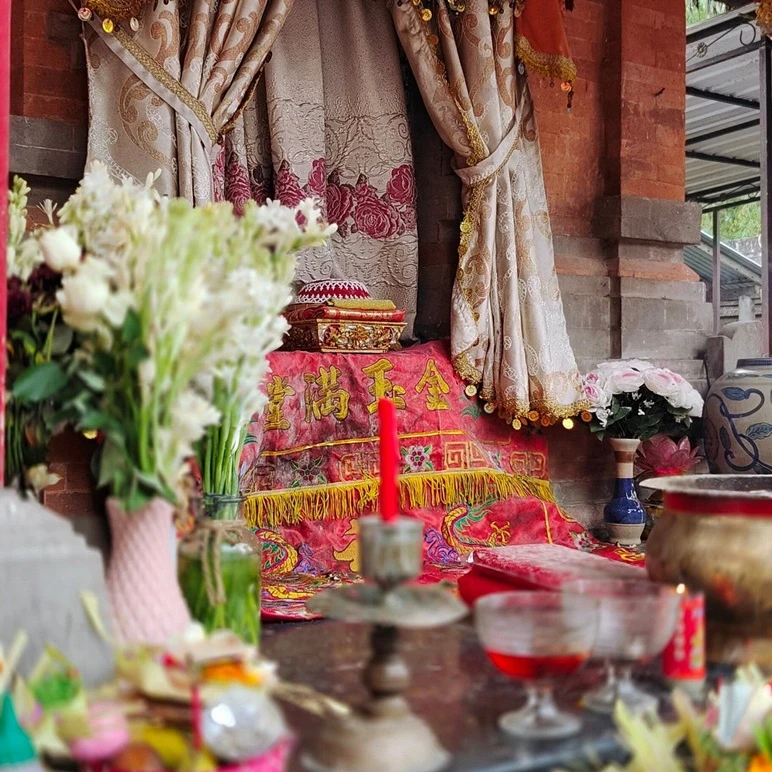
This marriage is central to the temple’s existence. Pura Dalem Balingkang was established as a place that honored not only Balinese Hindu cosmology, but also the presence and contributions of Chinese culture within the kingdom. The temple reflects an era when difference was not resisted, but ritualized and respected.
Cultural Syncretism Made Sacred
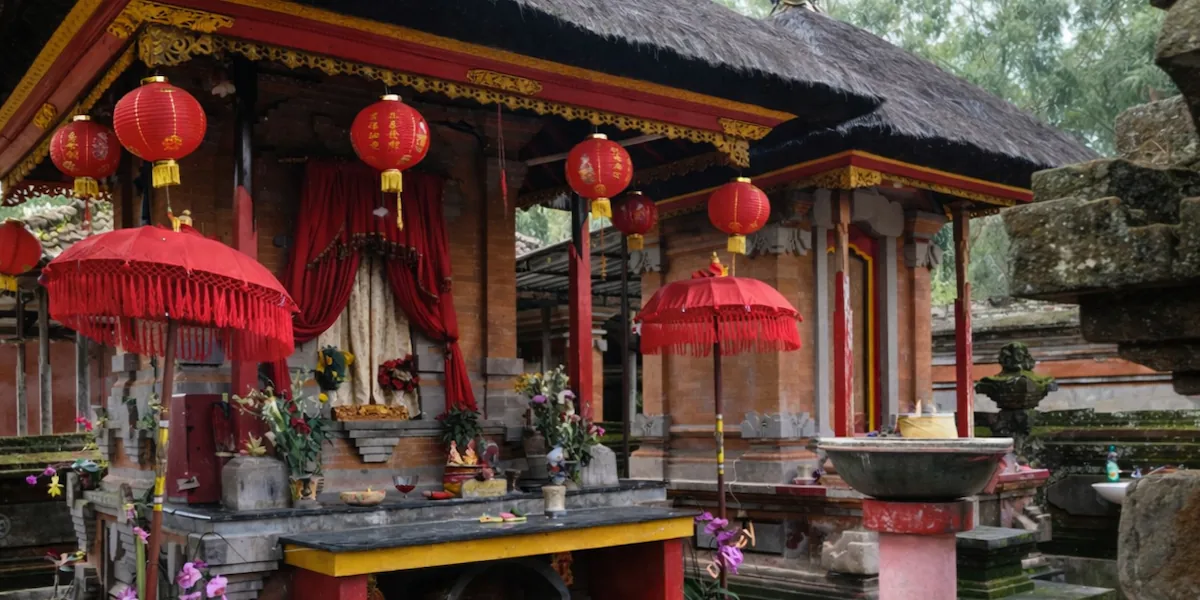
What makes Pura Dalem Balingkang exceptional is its role as one of Bali’s clearest examples of cultural syncretism. Unlike most temples that adhere strictly to classical Balinese Hindu forms, this site integrates Chinese elements in a way that feels intentional rather than decorative. Shrines dedicated to Kang Cing Wie stand within the temple complex, and Chinese-style ornaments, inscriptions, and iconography appear alongside traditional Balinese carvings. These elements are not later additions for visual interest. They are embedded in the spiritual logic of the temple, signaling acceptance of dual heritage within a single sacred space.
Architecture with a Highland Character
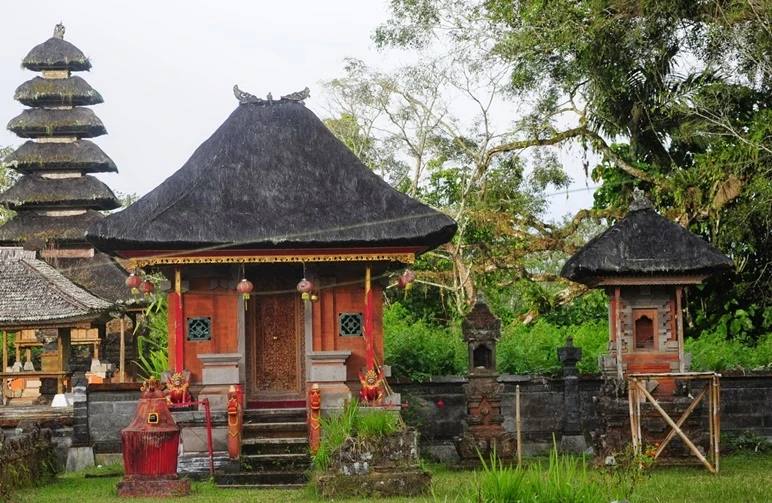
Set against the dramatic backdrop of Mount Batur’s caldera, the architecture of Pura Dalem Balingkang feels grounded and restrained. The temple complex follows a traditional spatial hierarchy, yet its materials and proportions reflect the highland environment. Stone courtyards feel heavier, more enclosed, and closer to the earth than coastal temples.
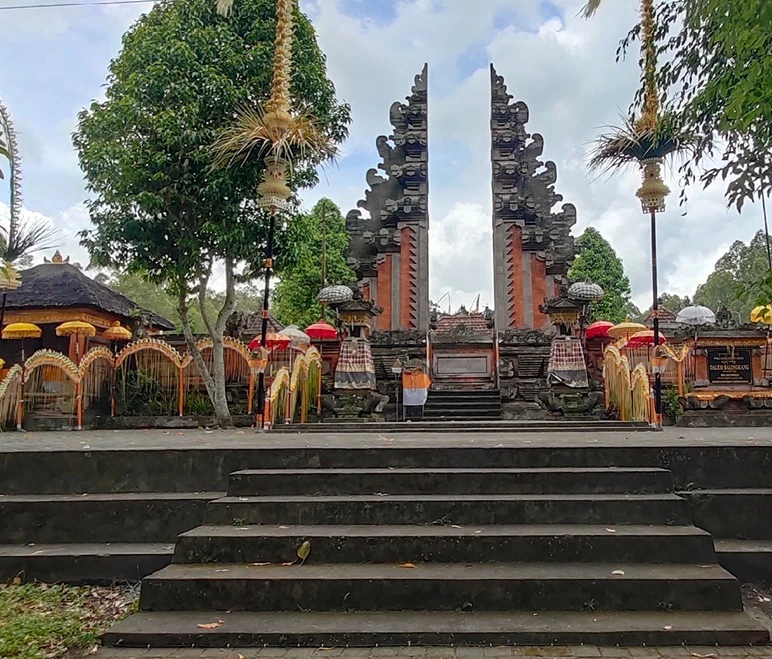
Chinese architectural accents appear in roof forms, decorative motifs, and shrine detailing, creating subtle visual contrast rather than dominance. The result is a complex that feels contemplative and dignified, shaped as much by landscape as by belief.
A Living Place of Worship
Pura Dalem Balingkang is not a museum relic. It remains an active temple for local communities who continue to conduct ceremonies tied to ancestral lineage, protection, and balance between seen and unseen worlds. Rituals here often acknowledge the dual heritage of the temple, reinforcing a philosophy of harmony rather than hierarchy.During temple festivals, offerings, prayers, and processions unfold in ways that mirror centuries-old traditions. The continuity of practice gives the temple its power. History here is not preserved behind glass. It is performed, renewed, and carried forward.
Why Pura Dalem Balingkang Still Matters
In a time when cultural boundaries are often framed as fragile or contested, Pura Dalem Balingkang offers a different narrative. It demonstrates that identity can be layered, inclusive, and resilient. The temple stands as proof that Bali’s past was not static, but engaged with the wider world through diplomacy, marriage, and belief.
For travelers seeking more than surface beauty, this temple provides insight into how Bali became Bali. It tells a story of openness without erasure, and tradition without rigidity.