

 Billy Bagus
 Jan 21, 2026
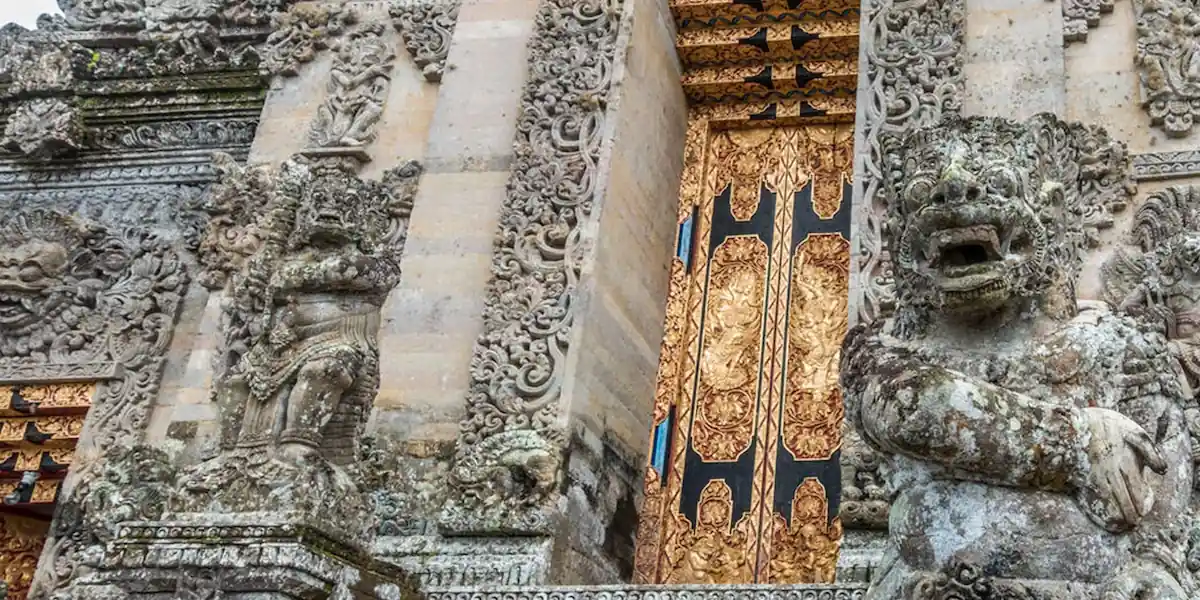
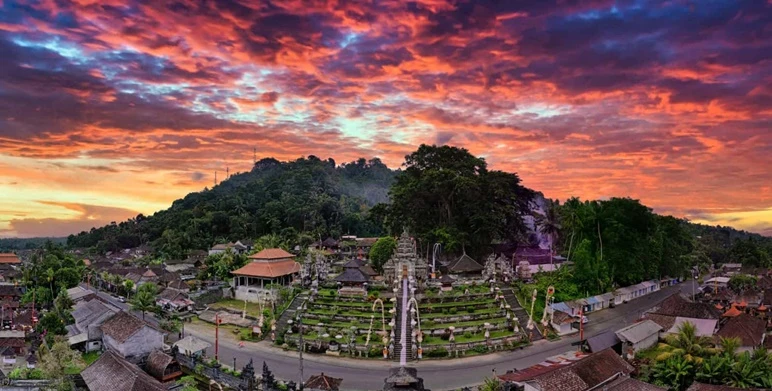
Set in the green highlands of Bangli, far from Bali’s coastal clamor, Pura Kehen stands as one of the island’s most quietly powerful temples. Built at the foot of a wooded hill, this former royal temple once held the spiritual authority of kings, priests, and entire communities. Its story is etched not only in stone and timber, but also in copper inscriptions, sacred fire symbolism, and rituals that shaped Bali’s political and religious life. Read on to uncover why Pura Kehen remains one of Bali’s most compelling historical sanctuaries.
Built at the foot of a wooded hill, this former royal temple once held the spiritual authority of kings, priests, and entire communities.
A Royal Temple Born of Fire
Pura Kehen is among the oldest documented temples in Bali, with its existence confirmed through three copper inscriptions dating from the late ninth century, early eleventh century, and thirteenth century. These prasasti reveal that the temple was originally associated with Hyang Api, the god of fire, later known as Hyang Kehen. The word Kehen itself is believed to derive from keren, meaning flame or place of fire.
Long before Bali was unified, Bangli was the center of a powerful kingdom, one of the island’s nine historic realms. Pura Kehen functioned as its state temple, where rulers and officials came not for spectacle, but for solemn oaths. These were no symbolic gestures. Oath-taking ceremonies were believed to carry supernatural consequences, enforced by divine fire through a feared curse known as sapata.
The Temple of Sacred Oaths
One of Pura Kehen’s most striking historical artifacts is the Bejana Sarpantaka, a ritual vessel wrapped with four serpents. This vessel held Tirta Sarpantaka, holy water used during oath ceremonies. Those who swore allegiance before Hyang Api were bound not only in life, but across generations. Breaking such an oath was believed to invite calamity upon oneself and one’s descendants.
This function elevated Pura Kehen beyond a place of worship. It became a moral and political anchor for the Bangli Kingdom, reinforcing loyalty, law, and divine oversight in an era where spiritual belief and governance were inseparable.
Architecture Rooted in Balance and Elevation
Pura Kehen follows the classic Balinese tri mandala layout, dividing the temple into three ascending courtyards that mirror spiritual progression. Built on a hillside, the temple rises physically and symbolically from the outer world to the most sacred inner sanctum.
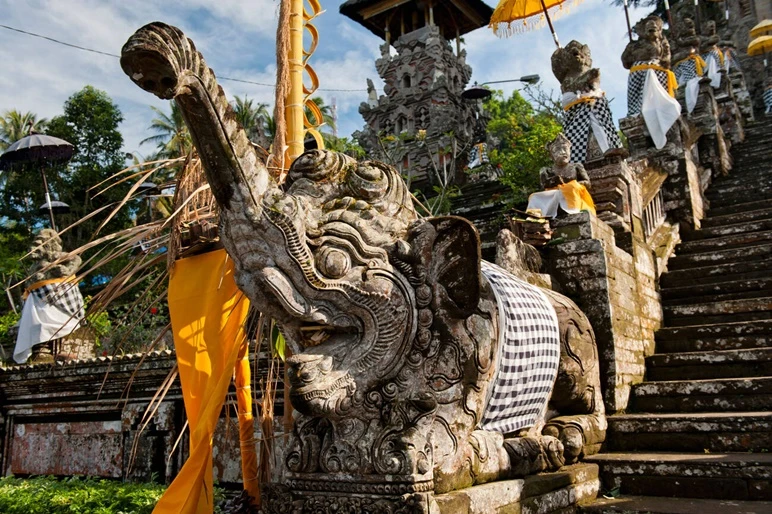
The outer courtyard is entered via a rare paduraksa gateway, an architectural feature typically reserved for inner sanctums. This deviation hints at the temple’s elevated status. Dominating this area is a massive banyan tree, estimated to be over 400 years old. Atop it sits a bale kulkul, a slit drum pavilion once accessed only by climbing the tree’s roots. Local belief holds that if a branch falls, it foretells disaster, its direction indicating who will be affected.
The middle courtyard serves as a transitional space, housing shrines and preparation areas for offerings. The journey culminates in the inner sanctum, where an 11-tiered meru tower rises as the temple’s most sacred structure. Dedicated to the temple’s protective deity, it is accompanied by a padmasana shrine honoring the Hindu Trimurti of Brahma, Vishnu, and Shiva.
Porcelain Walls and Global Echoes
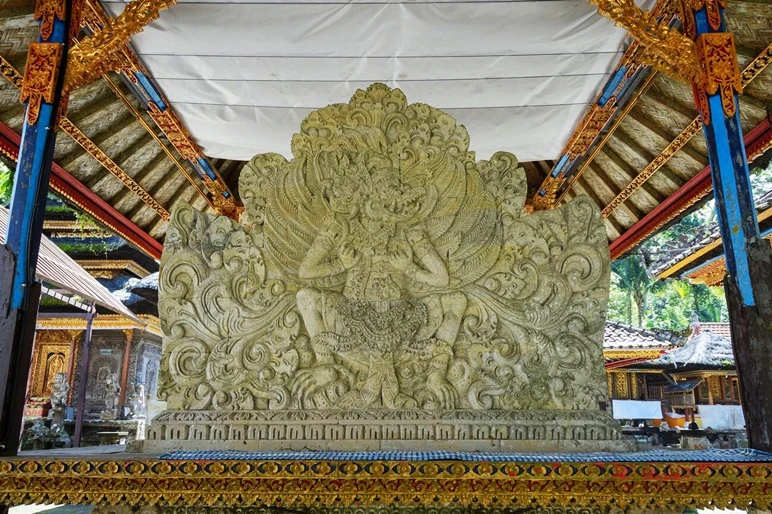
Encircling the inner sanctum are porcelain plates embedded into the walls, some depicting pastoral scenes from rural England. These ceramics, once prized trade goods, reflect Bali’s historic connections to global maritime routes and add an unexpected layer of cultural texture to the temple’s sacred space.
Living Rituals in a Silent Sanctuary
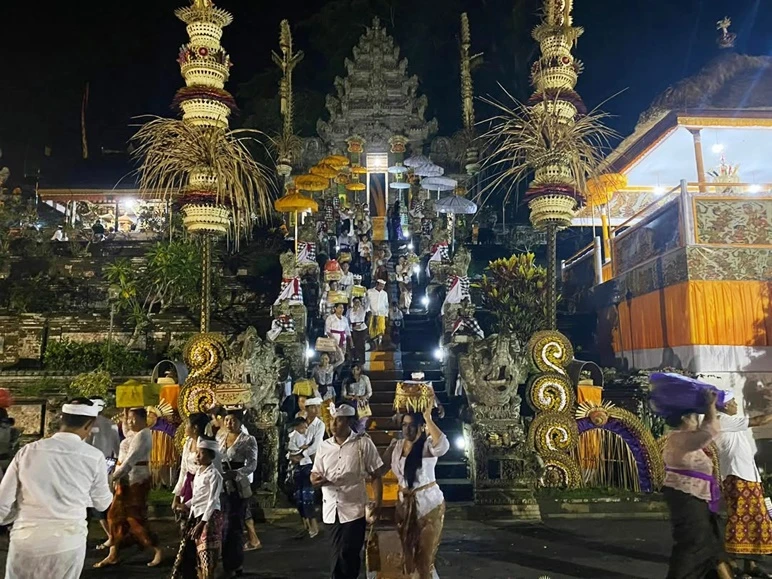
Despite its ancient origins, Pura Kehen remains spiritually alive. Major ceremonies such as Pagerwesi and Ngusaba Dewa draw communities together in cycles of devotion that have endured for centuries. Sacred dances including Baris and Rejang are still performed, linking present-day worshippers to the temple’s royal past.
In an island celebrated for its noise and color, Pura Kehen offers something rarer. A temple where fire is felt rather than seen, power is whispered rather than proclaimed, and history lingers in the hush beneath banyan leaves.