



 Annissa Wulan
 Sep 01, 2026
Central Jakarta’s regional transit framework is stepping into a crucial phase of maturity as the Jakarta Provincial Government and PT Transportasi Jakarta (Transjakarta) roll out formal fare structures for specialized Transjabodetabek routes. Grounded in updated regional transportation decrees, the framework transitions key suburban express lines from initial promotional and trial stages into fully integrated, permanent transit corridors.
The shift reflects a calculated effort to manage regional transportation subsidies while maintaining accessible mass transit across satellite cities. Addressing the economic rationale behind targeted tariff determinations, Jakarta Governor Pramono Anung underscored that fare decisions undergo comprehensive cross-sectoral evaluation.
"Regarding the finalized tariffs, every decision is reached after thorough technical studies and public consultation. The goal remains clear: maintaining strong public transit adoption while managing operational sustainability," Governor Pramono stated during a briefing on regional transit infrastructure.
Under the established structure, specialized express lines linking key suburban hubs directly to international gateways—such as the Blok M to Soekarno-Hatta Airport corridor (SH1)—are set at IDR 15,000 per journey following extensive operational trials. Meanwhile, foundational suburban feeder routes connecting commuter zones continue operating under standard rates of IDR 2,000 to IDR 3,500, ensuring daily suburban commuters retain affordable access to the central business district.
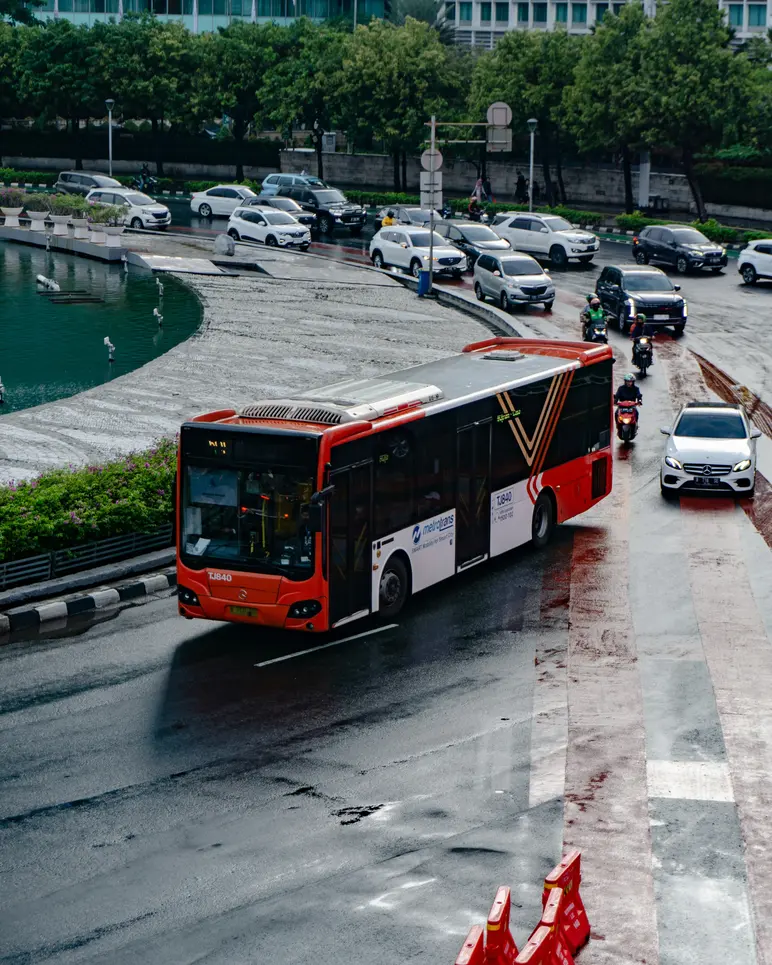
Suburban passengers navigate the expanded cross-border network through a unified digital ticketing infrastructure. Tap-in and tap-out readers across all Transjabodetabek fleets accept all major bank-issued Electronic Money Cards (including Bank Mandiri e-Money, BCA Flazz, BRI Brizzi, and Bank DKI JakCard), alongside digital QR-based ticketing integrated into the JakLingko mobile application. Passengers transferring between Transjabodetabek buses, MRT Jakarta, and LRT lines within a single journey benefit from JakLingko’s integrated fare capping system, which automatically calculates multi-modal connection discounts to prevent double-charging across network boundaries.
Detailing the service strategy behind the formalization, PT Transportasi Jakarta Chief Executive Officer Welfizon Yuza clarified the distinction between price increases and structural fare setting.
"The implementation of established tariffs for specialized corridors marks the completion of their trial phase rather than a simple rate hike. It allows us to optimize fleet allocation, maintain headways, and enhance service reliability for commuters across Jabodetabek," Yuza explained.
The economic necessity of calibrating Transjabodetabek fares coincides with growing regional patronage. Express corridors connecting suburban hubs routinely log over 55,000 monthly passenger trips, demonstrating high reliance on direct, high-capacity bus transit. Supporting this operational scale, Jakarta Transportation Agency (Dishub) Head Budi Awaluddin highlighted the extensive policy research underpinning the tariff framework.
"The pricing structure incorporates evaluations from transport academics, municipal studies, and the Jakarta Transportation Council. It strikes a precise equilibrium between user affordability and high-quality fleet upkeep," Awaluddin noted.
By aligning targeted fares with expanding digital payment capacity, Transjabodetabek reinforces its position as an essential pillar of Jakarta’s integrated metropolitan transit network.