

 Vincentius Alvin Yoga
 Apr 06, 2026
The Badung Regency Government has confirmed that the continuation of the seawall development project near Pura Luhur Uluwatu in Pecatu Village, South Kuta, will be funded under the 2026 regional budget.
Badung Regent I Wayan Adi Arnawa announced the decision following the completion of the project’s first phase, which focused on coastal protection and cliff stabilization in the sacred Uluwatu area.
Commitment to Coastal Protection and Cultural Access
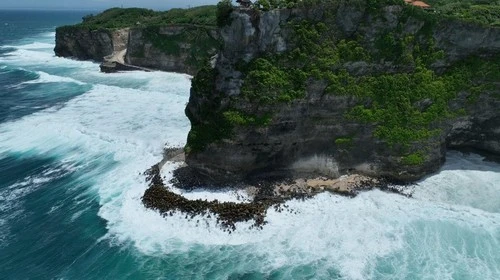
Image source: Dinas PUPR Badung
Badung's Regent I Wayan Adi Arnawa emphasized the government’s commitment to a more comprehensive development of the Uluwatu tourism area, including improving access to Pura Batu Metandal, which is a part of an ongoing aspiration of the Pecatu Traditional Village community.
He acknowledged that previous construction efforts could not be fully completed due to time and budget constraints. Beyond environmental preservation, the continuation of the project is considered essential to strengthen access to the temple while ensuring the long-term stability of the surrounding cliffs.
Local temple authorities have welcomed the plan. Panglingsir Puri Jro Kuta, I Gusti Ngurah Jaka Pratidnya, also known as Turah Joko, noted that the current cliff conditions require further intervention so the seawall can be extended toward Pura Batu Metandal.
The Next Phase
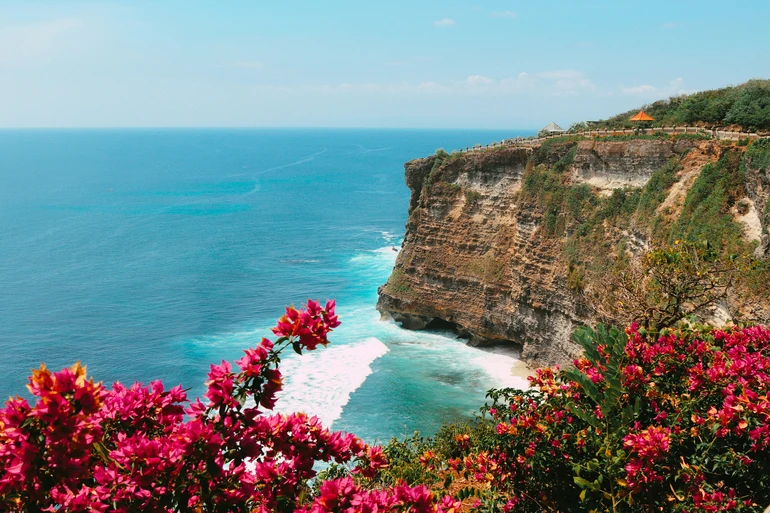
Image source: Unsplash
The first phase of the seawall project has been completed last year, covering the construction of beach access roads, revetment installation, cliff stabilization beneath Pura Luhur Uluwatu, and the renovation of Pura Beji.
The next phase will include extending the revetment toward Pura Batu Metandal, addressing cracks on the left side of the cliff, and planting vegetation suited to the natural habitat of the area’s monkey population.
According to Acting Head of the Badung Public Works and Spatial Planning Agency (PUPR), Anak Agung Rama Putra, the project is being carried out in three phases. The first phase was focused on opening an inspection road while reducing wave impact, with the current breakwater structure capable of withstanding waves between four and six meters high, which has already done by last year.
He added that the finishing layer, using armour stone and limestone, will be implemented this year to strengthen the structure. The second phase is expected to begin in April 2026 and is targeted for completion by 2028.
Public Concerns
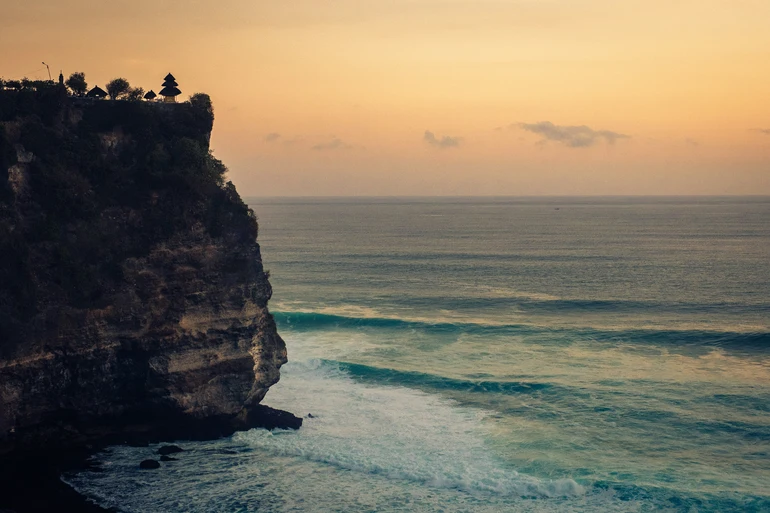
Image source: Unsplash
The Uluwatu seawall project has drawn significant public attention in recent years. Initially presented as a measure to stabilize the limestone cliffs from erosion and cracking, the project has also sparked speculation that newly built access roads could support future tourism developments.
Concerns have also been raised by local residents regarding erosion, visible damage to parts of the seawall, and the emergence of new cracks along the cliff.
The project previously faced concerns over the absence of a formal environmental impact assessment (AMDAL) at the start of construction. But despite the debates, community leaders remain cautiously optimistic. Pecatu Traditional Village Head I Made Sumerta expressed hope that, in the long term, the project will secure the cliffside and protect the temple above from ongoing exposure to strong ocean waves.
Officials maintain that once completed, the coastal protection structure will significantly reduce wave impact and help preserve one of Bali’s most important spiritual and cultural landmarks.