

 Stallone Tjia
 Feb 09, 2026
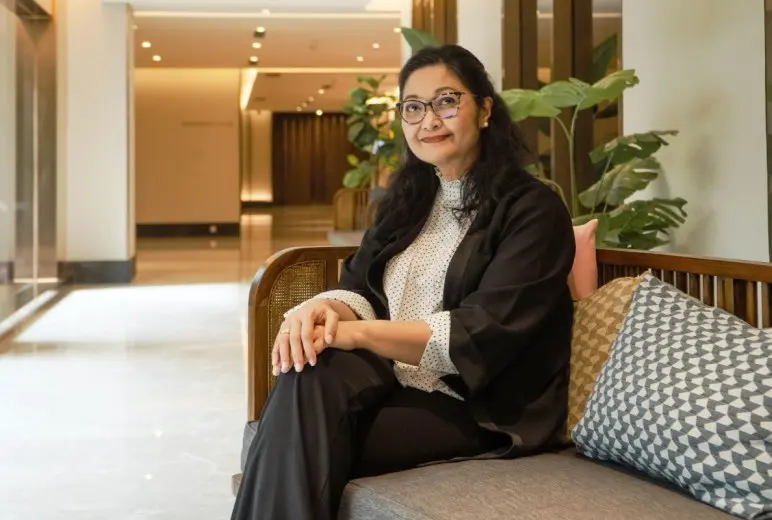
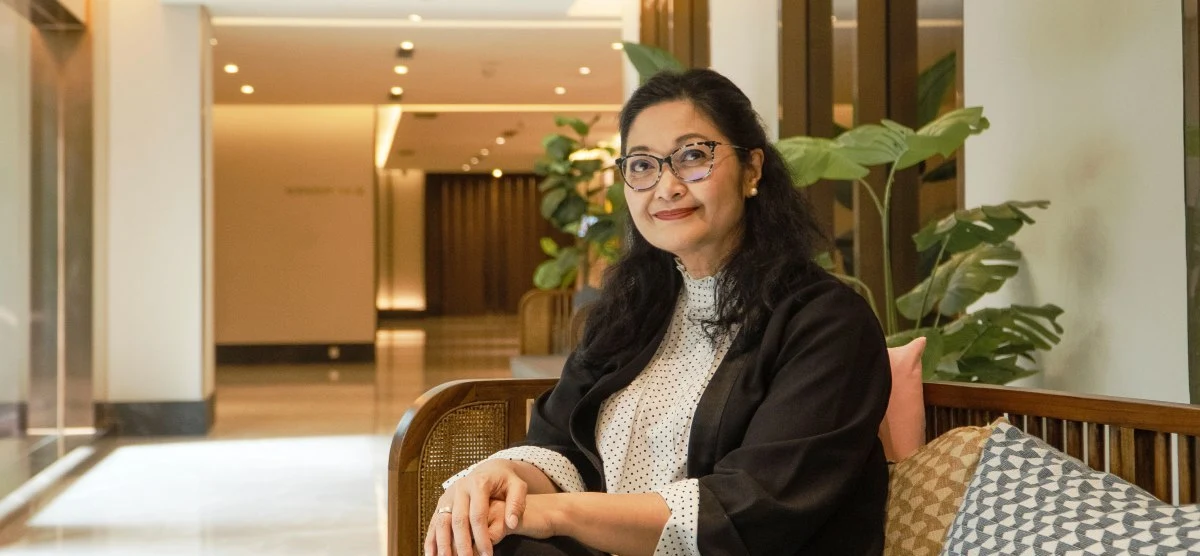
Ade Noerwenda, Director of Operations at Ashley Hotel Group, brings over 30 years of experience in the service industry, including more than two decades in senior leadership. Known for her people-first approach, she believes that strong culture is the foundation of sustainable performance. At Ashley, she focuses on developing leaders, strengthening service culture, and driving growth across multiple properties—always with the conviction that genuine care is what keeps service human, relevant, and impactful. What’s New Jakarta recently sat down with her for an exclusive interview, where she shared her insights on building meaningful hospitality through culture, leadership, and purpose-driven performance.
Exclusive Interview with Ade Noerwenda – Director of Operations at Ashley Hotel Group
1. You have spent 30 years in the service industry. What defining moments most shaped you as a leader?
When I was first appointed as a trainer—and later as a Training Manager—that was a defining moment for me. Even before the title, back when I was asked to become a trainer at The Westin Surabaya, I realized something important: as a trainer, you have to walk the talk. Imagine teaching leadership or how to be a good supervisor, yet failing to demonstrate it yourself—it would be absurd.
I was, in a way, forced to practice what I taught. If I was teaching others how to be a good supervisor, then I had to show what a good supervisor truly looked like. Every lesson I passed on, I had to first learn and live myself.
That’s when I understood that becoming a good leader starts with practice. I was shaped by small lessons from the very beginning of my journey as a trainer. Along the way, I learned from mistakes, from interactions with many managers, and from countless real-life situations. But that early moment—that realization—was the true defining point of my leadership journey.
2. What does a typical workday look like for you as Director of Operations overseeing multiple hotels?
Every day is unique. I always begin my day by reviewing the performance dashboard—checking the hotel’s revenue, occupancy, and average rate. Most importantly, I look at guest feedback to understand whether there are fair comments or any complaints that need attention.
After that, I review the team’s performance. If needed, I visit the hotel and spend time on the ground. From there, the conversations naturally move into leadership—not just discussions, but meaningful leadership dialogues.
What I focus on most is talking about performance with the leaders, aligning expectations and direction. I don’t see my role as managing a building. At the end of the day, a hotel’s results are a reflection of its leaders and their leadership. Whatever happens inside the hotel ultimately depends on whether the leaders are capable of leading effectively.
To achieve strong performance, alignment is essential—without it, the results will never be optimal. I truly believe that performance is not about the building itself, but about alignment. Most importantly, it is about aligning the performance of our leaders.
3. You oversee many hotel units simultaneously in Jakarta. How do you effectively juggle leadership across multiple properties without losing focus on people and culture?
What’s interesting about Ashley Hotels is that each property has its own DNA and its own unique selling point. However, we must ensure that we all breathe the same air—our culture. Our culture is ‘We Love Serving You.’
The question then becomes: what does ‘We Love Serving You’ look like in practice? How do we teach it to every hotel and every leader? To bring this culture to life, each property runs a program called Guest of the Day, which serves as a bridge to translate our service philosophy into real action.
Every month, we hold bi-weekly meetings where hotel managers are asked to share their best practices through their Guest of the Day experiences. Because personalized service lies at the heart of this program, these stories inspire other hotel managers. That inspiration leads to replication—of good culture and good service—across the group.
This is how consistency is maintained. I believe trust, followed by strong communication and consistent service, is what keeps everything moving in the right direction. Trust alone is not enough—without communication, consistency cannot be sustained, and the Ashley DNA cannot exist. That is why I believe storytelling has a powerful impact. It is how we continue to preserve our service culture and consistency.
4. In today’s highly competitive hospitality landscape, how do you innovate and stay ahead in operating the hotels?
This approach is both innovative and interesting. One day, I placed Ashley into a brand matrix and challenged myself by comparing it with other hotel groups. Ashley naturally shifted to the right side of the matrix—not toward standardized brands, but toward creative brands. That positioning puts us in direct competition with other creative brands, which creates even greater pressure. It means innovation must be continuous.
But innovation doesn’t always have to come from us. People often forget that the simplest way to be innovative is to ask our guests—listen to them. Ask questions like, ‘If we were to design a room, what theme would you like? What else do you need?’ Guests are always happy to share their ideas.
When we created themed rooms for women, for example, we didn’t decide everything ourselves. We asked guests to suggest ideas—very Instagram-friendly concepts. From twenty suggested themes, we selected ten and brought them to life. Then we told them, ‘Your ideas have been turned into these rooms.’ They were thrilled.
Those guests became our very first users of the rooms—and from that moment on, loyal guests. Listening to guests is a habit many people overlook. Staying innovative doesn’t mean every idea has to come from us. Innovation can be simple. Asking for feedback and truly listening to guests can be one of the most powerful forms of innovation.
5. What part of the job is the most challenging on a day-to-day basis?
The most challenging part is working with people—because a hotel is, ultimately, about people. Guests are people with different expectations, and our staff are people who come with different motivations every day.
Maintaining the same service standards daily, while navigating those varying motivations, is not easy. Motivating the team to consistently deliver the same level of quality every single day is one of the toughest responsibilities. Of course, it requires training, rewards, appreciation, and constant monitoring—along with continuously reviewing guest feedback.
At the same time, we must anticipate guests’ needs even before they arrive, so we can exceed their expectations. Exceeding expectations takes energy, and over time, people can become tired or bored because it feels routine. But it should never become routine.
For us, guests arrive every day. But for them, this journey is something they have planned—it is special. Every stay, every arrival, and every departure matters. The challenge is ensuring we never treat it as ordinary, because to our guests, it never is.
6. Looking back at your journey into senior leadership, what lessons did experience teach you that no classroom ever could?
To become a leader—and to inspire people—you have to help them see what working in a hotel is really like. Is the hospitality industry still exciting? What does service truly mean today? I’m not entirely sure, because the service world now is very different from when I first started.
These days, you can walk into a beautifully designed coffee shop, yet when you order, you’re handed a paper cup. The feeling of receiving a paper cup versus a glass is very different. A glass represents effort. Serving with a glass means coming to the guest, presenting it properly, and being present. A paper cup, on the other hand, is something guests carry themselves. The challenge—and the level of service—is simply not the same.
If you want to work in the service industry, understand this: real service is about serving with the glass, not serving with a paper cup. Serving with a glass requires greater effort, authenticity, and sincerity. It demands genuine care—what we often call ‘serving from the heart.’
At Ashley, our culture is ‘We Love Serving You,’ and we translate that into action through care—expressed as collaboration, agility, respect, and enthusiasm. Service is never a solo effort. You can never truly serve a guest by working alone. Understanding guests requires every department to support one another, especially when it comes to personalization.
Personalization begins with curiosity—wanting to know a guest’s habits, preferences, and what matters to them. But curiosity alone is not enough. Once we know, we must ask, ‘What’s next?’ Then we come together as a team to discuss how we can delight that guest. What can you do? What can I do? True service is created together.
7. How do you ensure consistent, high-quality guest experiences across Ashley Hotel Group?
Simply put, it’s about empowering hotel managers. As a leader, I cannot check or control everything myself—and that shouldn’t be my role. Our responsibility is to enable our leaders and managers to do their jobs well. That means empowering them, trusting them, and giving them the confidence to perform at their best.
Empowerment alone, however, is not enough. We must also train them and show them how. We clearly define what a well-run hotel looks like—A, B, and C—and then we review it together through leadership discussions. We ask, ‘What happened?’
We use various tools, including daily guest feedback systems. If a score comes in at 80, I will ask why—because the ideal score is 100. Even a small comment matters. We discuss what went wrong and what needs to be done to prevent the same mistakes in the future.
Sometimes, you don’t even need a report. When you visit a hotel, experience teaches your eyes to immediately see what’s not right. Conversations with guests also reveal exactly what is happening. All of these tools help us monitor the consistency of both product and service. But none of this is possible without trust. Without empowering hotel managers—and most importantly, without training them—consistency cannot be achieved.
8. What advice would you give to young women aspiring to leadership roles in hospitality?
I actually started my career in the kitchen. I began as a steward, then moved into engineering. I jumped across divisions—kitchen to engineering—two departments that are known to be highly male-dominated. At The Westin Surabaya, for example, the engineering team had around eighty men and only two women. It was truly a male-dominated environment.
From those departments, I learned something fundamental—this is where my understanding of hiring and care began. Later, I moved into Human Resources, and every two years I progressed, moving roles and receiving promotions. Yet throughout all those transitions, one thing remained constant. The feedback I consistently received was this: people felt that I cared.
Caring is not a weakness—it is a strength. As women, we have a unique trait: a deeper sense of care. We should use it as our strength, not hide it because we think it makes us look weak. That would be a mistake. Caring is our power.
Curiosity, for example, is a form of caring. The same applies to our teams. When someone says they want to become a leader, we shouldn’t stop there. We should ask: to what level? Manager? General Manager? What have they learned so far? What training do they still need? How far has their manager guided them? These are questions we can—and should—ask.
If you truly want to groom people, you must ask questions. That curiosity is care. And today, I am proud to say that all of my former assistants have gone on to become Directors, Vice Presidents, and Assistant Vice Presidents. It works. Caring works. What was once seen as a weakness is actually our greatest strength. So use it. Don’t soften it. Don’t hide it. Caring is leadership.
9. What upcoming projects or initiatives at Ashley Hotel Group are you most excited about in the near future?
Since we have just launched ASHLEY NEWAIR Menteng this past December, it remains our main focus today. I see it very much like a baby—it needs to be nurtured and is still too young to move on to another project. Especially because the concept itself is very new for Jakarta. Every room is equipped with an air purifier, and the property is 100% non-smoking. In Jakarta, that is quite challenging.
That said, while it is challenging, the market does exist. This is the kind of challenge where the market needs to be educated. From experience, it takes at least three to five months for demand and market segments to stabilize. That’s why my focus right now is fully on ASHLEY NEWAIR Menteng, until we see it truly settled and stable. Beyond our regular marketing efforts—such as weddings and other events—this property requires dedicated attention for the next three to four months.
It truly requires effort. From the very beginning, when we designed the building, we chose a connected colonial concept because we believed in it. That belief came from guest feedback at Ashley Tugu Tani. Many of our guests are Europeans, particularly from the Netherlands. When we asked why they stayed with us, they shared that it was about nostalgia. They stayed at Ashley Tugu Tani because they wanted to visit Menteng, to see what the neighborhoods they once knew looked like. We discovered that nostalgia is a real market. And that is exactly why ASHLEY NEWAIR Menteng was created the way it is.