

 Mirella Pandjaitan
 Jul 17, 2026
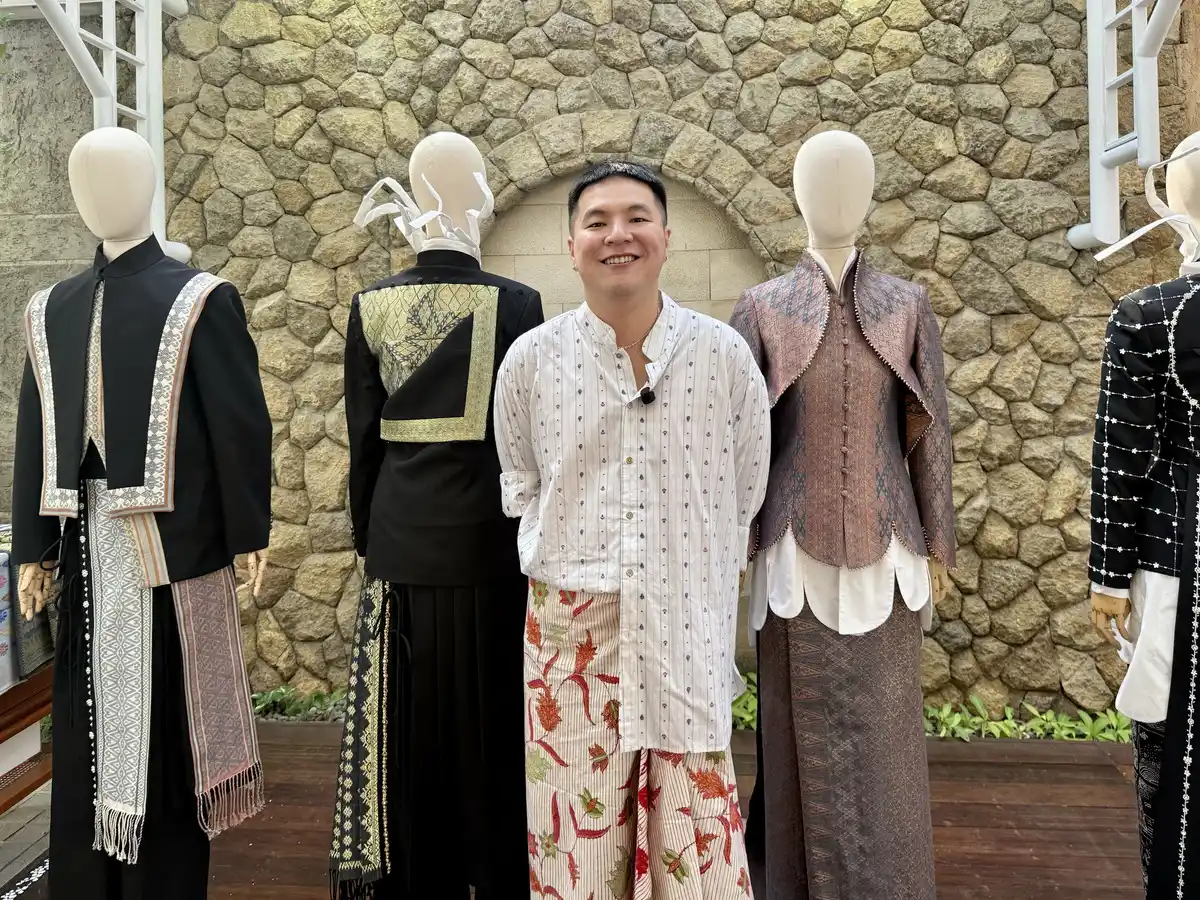
Can a conversation lead to the weaving of the algorithm? Correct, those mathematical structures are in question. And, it certainly can. Take Wilsen Willim.
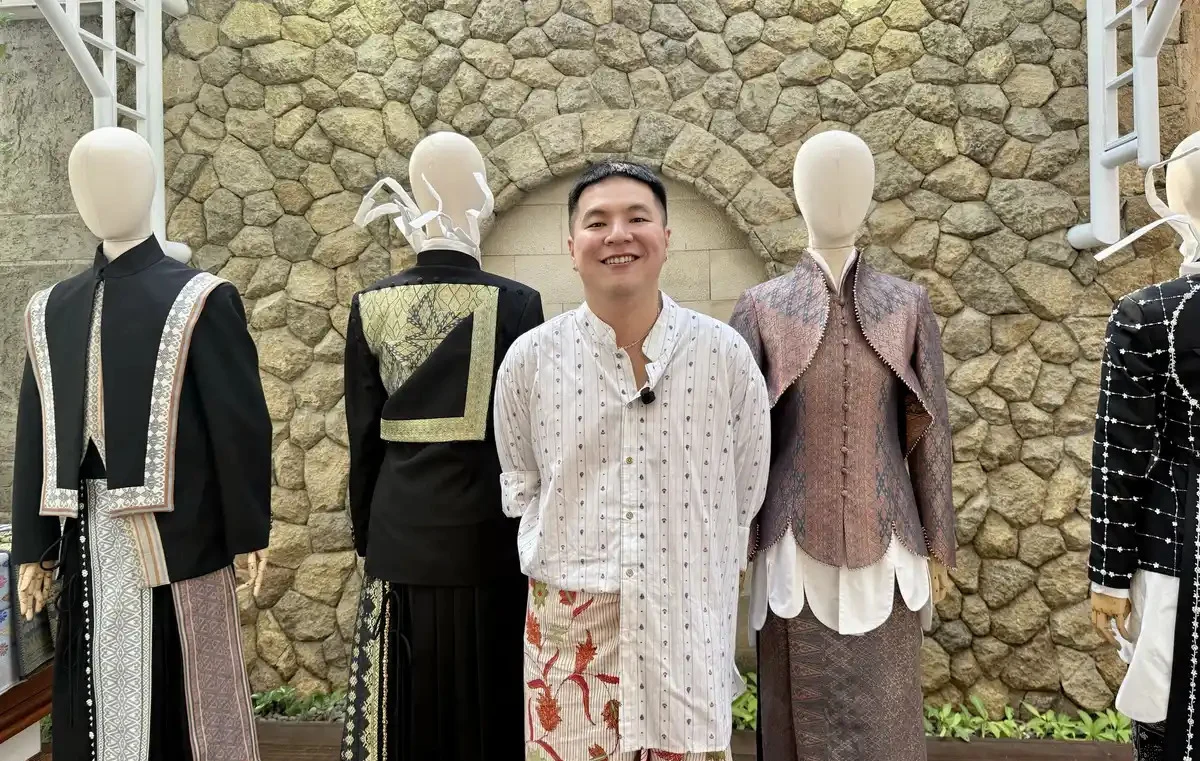
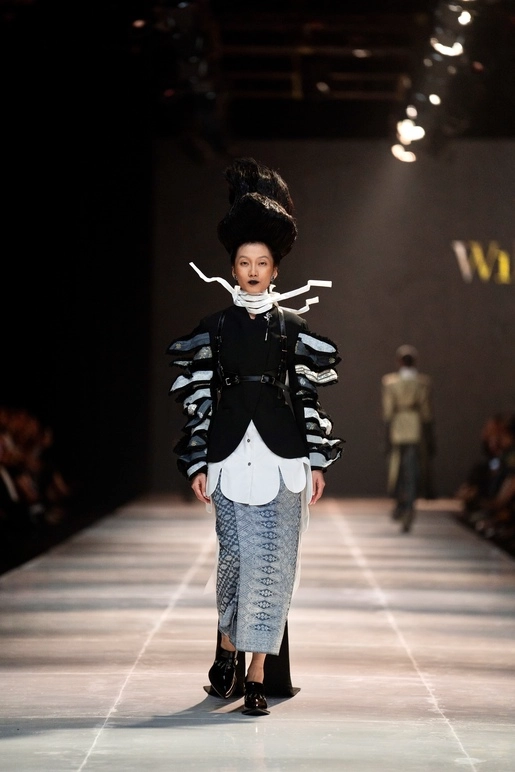
Wilsen’s creative career reached the 10th-year mark. Algorithm: Universal Language is a retrospective of Wilsen’s run while continuing his exploration of Indonesia's traditional textiles. It prompted him to do the unthinkable in commemoration of his defining moment in fashion: presenting his first-ever couture collection that places the intricate, repetitive patterns formed by the orderly intersection of warp and weft threads hidden in an underlying algorithm. “Numbers exceed language; it's a language that everybody from all over the world understands," praised Wilsen.
Along with his team and collaborators, they crafted layers and layers of what Wilsen noted as a “quite complex concept with many interconnected elements”.
“We transformed traditional Indonesian tenun into something that resembles denim because, to me, denim is also a universal textile language.
People all over the world recognise and relate to it,” regarded Wilsen.
The concept of algorithms extended far beyond the garments to a series of specially commissioned hand-drawn Cirebon batik motifs created exclusively by his studio. Even the soundtrack accompanying the runway presentation, held on 8th July 2026, at Hotel Mulia Senayan's Grand Ballroom. Continuing his collaboration with Ican Harem, the woven textiles were interpreted through AI into algorithmic data before being transformed into an original score, allowing the sounds of weaving to become part of the runway experience.
Looking back on his journey, ambition propels Wilsen to keep innovating. “There's only so much you can change when it comes to silhouettes because the human body itself hasn't changed,” he explained.
“Innovating through textiles became more interesting. It’s uncommon to see tenun interpreted as denim, and exploring that intersection between heritage and contemporary materials has been incredibly rewarding for me.”
Four regions, four tenun
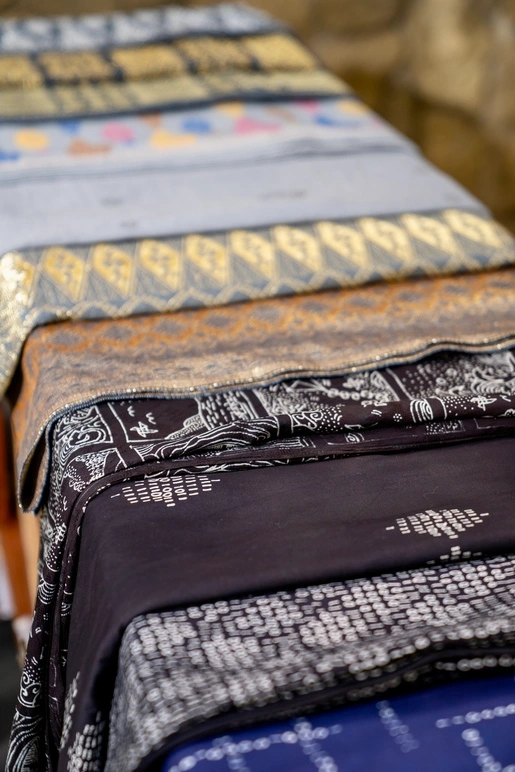
Sixty men's and women's couture looks were presented to honour Indonesian craftsmanship. The garments combined woven textiles from four Indonesian regions, made with recycled denim yarn developed by Ecotouch. This season, Garut silk weaving from West Java resurfaced, alongside the introduction of three new regional textiles: Dayak Iban weaving from Kapuas Hulu, West Kalimantan; Jembrana songket from Bali; and Minang songket from Halaban, West Sumatra.
Research and experimentation on the recycled denim yarn began in early 2023. Before being reimagined, acquiring the right weaving communities willing to experiment with recycled yarn became one of the most important parts of the project–and a major challenge. Their unfamiliarity with the material, as well as hesitation to branch out, stood in the way. Being much more fragile, the yarn contains shorter fibres and a tendency to break easily. Eventually, cotton yarn was blended to be weaveable.
The denim was sourced from leftover scraps and discarded garments that would otherwise end up in landfills, before undergoing a painstaking recycling process. Every zipper, button, rivet, and metal component had to be removed, while the fibres were carefully sorted to ensure the yarn could withstand the high heat required for production. Once spun into new yarn, it was sent directly to the weaving communities. Aside from suggesting combinations such as metallic threads or naturally dyed yarns, Wilsen deliberately left the creative decisions to the artisans, ensuring each region's traditional motifs remained authentic and untouched.
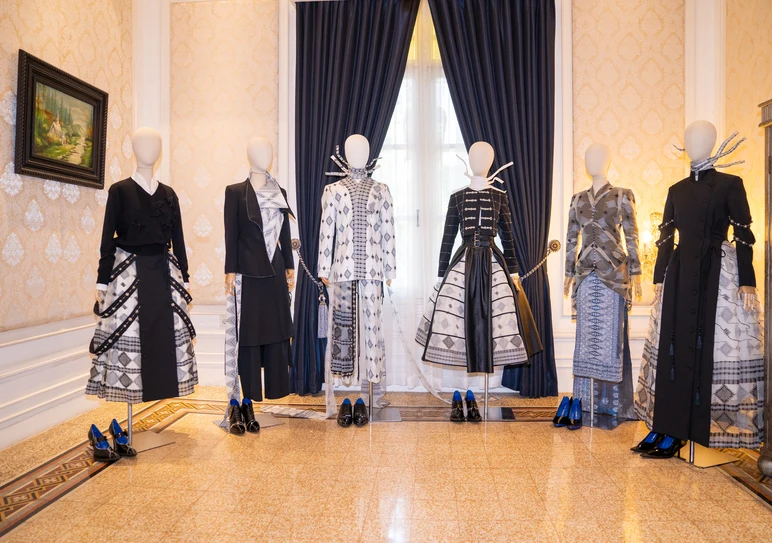
Once the fabrics were finished, they were crafted into shirts, jackets, trousers, skirts, corsets, aprons, bibs, and traditional jarik wraps in colours dominated by soft shades of blue inspired by recycled denim, accented with metallic gold, silver, and bronze, alongside black, white, grey, and striking electric blue.
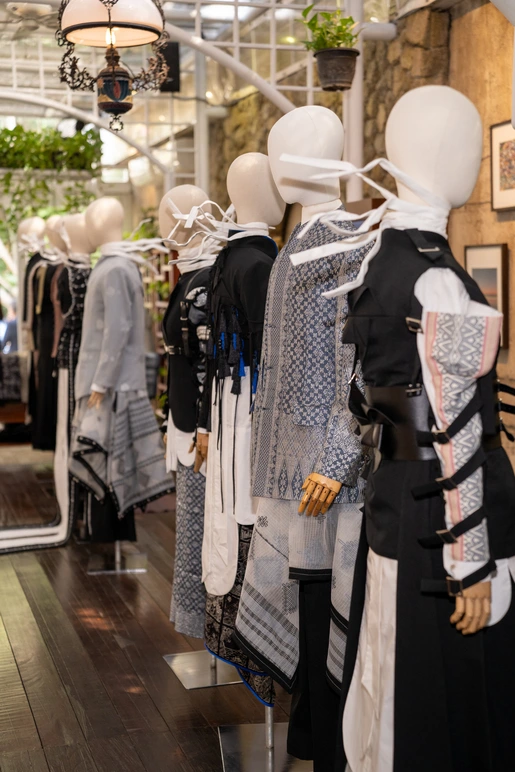
Wilsen pointed out his standout piece: blue textile from woven recycled denim yarn combined with bronze thread–an idea shared by one of his artisan partners.
“Denim and bronze aren't materials people usually associate with each other, which is exactly why I find the combination so interesting–unexpected, yet somehow very harmonious,” he commented.
An interesting fusion between tradition and rebellion
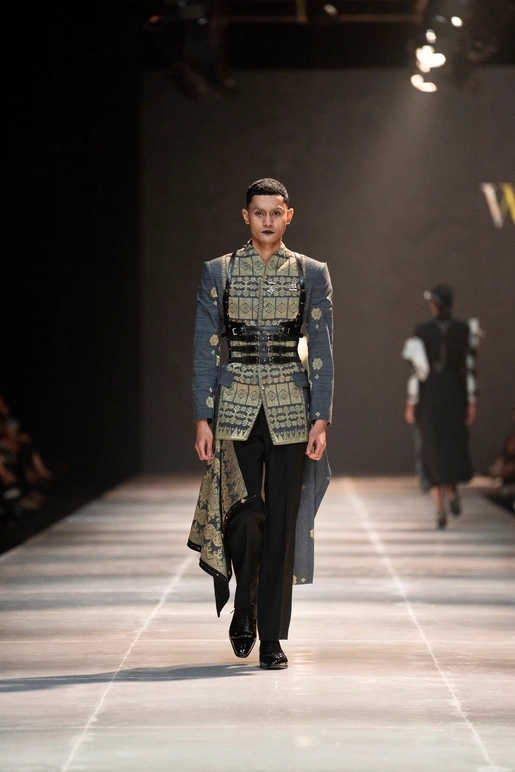
The collection's unexpected fusion of refined Indonesian heritage with rebellious punk influences created a subtle tension. “I'm especially drawn to the pieces that incorporate leather. It's probably unexpected from me, but introducing leather added a sense of rebellion, experimentation, and freedom,” he mused. Leather accessories included harnesses, belts, corsets, biker jackets, and high-slit skirts.
Elevated outerwear and shirts featured bottleneck collars inspired by the Kartini kebaya, alongside beskap and janggan collars, reflecting enduring elements of Indonesian dress through a modern lens. The collection was completed with custom accessories created in collaboration with local brands, including Subeng Klasik for metal jewellery, Peau for leather accessories, and Bocorocco for bespoke footwear.
“I always design with my clients in mind. The women who wear Wilsen Willim are usually confident and unafraid to stand out. They enjoy feeling powerful and expressing their individuality. They're also the kind who likes discovering something before everyone else,” described Wilsen.
Nazli Basuki had every intention of shopping the collection after attending the special fashion show. “I love that the collection incorporates authentic Indonesian weaving, yet it doesn't feel traditional in the way people usually imagine. It still carries that Indonesian identity, but through a thoroughly modern lens.
“His contemporary interpretation of batik and traditional textiles has made them feel fresh and accessible for a younger audience—even changing the way I wear them myself,” she said, dressed head-to-toe in Wilsen Willim from a previous collection.
A longtime peer in the fashion industry, she’d always admired his creativity. “Wilsen is remarkably candid—honest, insightful, and endlessly engaging. Watching his collections evolve over the past decade has been nothing short of remarkable,” she added.
Wilsen reckoned the clothes had an element of confidence and power about them. They project strength without feeling overly aggressive. “I think many of the women who wear my designs enjoy that feeling of quiet power,” he commented.
Nazli concurred. “Wearing Wilsen Willim has long been synonymous with confidence for me. His impeccably tailored designs have been a workwear staple of mine for years!” she gushed.
A closer look at Algorithm: Universal Language at the RE-SEE
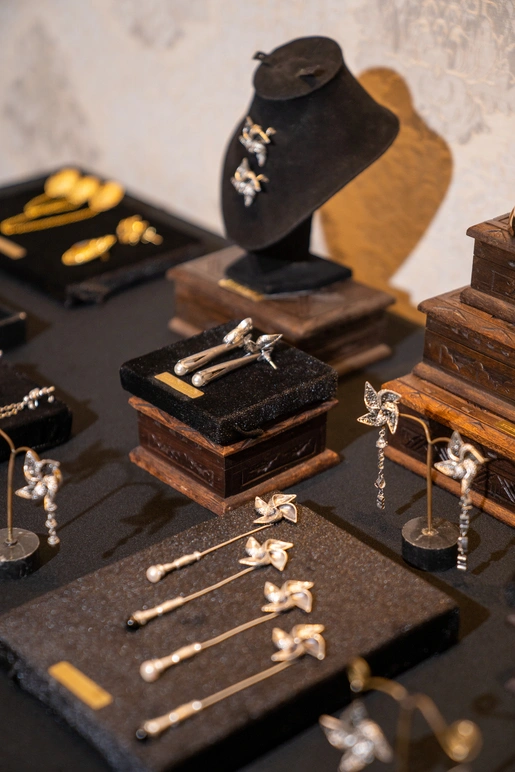
The following day from the fashion show, Rumah Heritage Menteng by Plataran set the stage for Wilsen's Re-See presentation, a closer look at the recycled woven couture pieces.
Ryna Ibrahim missed the fashion show but was eager to bask in the binary codes and show support. She’s rarely devoted to one designer; nonetheless, Wilsen’s ability to reinterpret batik and traditional Indonesian textiles has consistently drawn her. “Once I understood how he translated binary code into woven textiles, the designs took on an entirely new meaning—a testament to his thoughtful approach to storytelling through fashion,” she shared.
The jewellery and footwear integrated seamlessly into the runway presentation, she acknowledged. “They felt like genuine extensions of the collection with real commercial potential. That's what makes Wilsen's approach different. He builds authentic creative partnerships where every contributor helps shape the final vision,” she added.
Growing demand for garments made with traditional textiles is bound to naturally increase demand for handwoven fabrics, helping improve the livelihoods of weavers across Indonesia while encouraging younger generations to continue the craft. So does more design exploration. Traditional textiles are often perceived as old-fashioned, when in reality they hold immense creative potential.
The missing piece? Storytelling. When the months of meticulous work behind each piece are understood, the conversation shifts from price to value. Rather than placing international luxury on a pedestal, it's time for local artisans to receive that same appreciation and, above all, fairness.
Becasuse beyond business growth, Wilsen measures success by the impact on the artisan communities he partners with. His greatest achievement is seeing their incomes and livelihoods improve through sustained collaboration. Industrial production has replaced artisans instead of supporting them. Machines produce textiles faster and cheaper, yet the economic benefits rarely reach the weavers themselves.
A documentary series titled ‘Reinventing Tenun: Journey to Algorithm’, produced in collaboration with filmmaker Magejibril, chronicles Wilsen's journey through the four weaving regions featured in the collection. The six-episode documentary is scheduled to premiere on 21st August 2026, at XXI Plaza Indonesia.
“By using locally produced recycled yarn, we're also helping reduce textile waste while addressing the yarn shortages and rising costs that often hinder traditional weavers' production. Creating recycled yarn locally champions weaving communities, offering another material to work with while simultaneously reducing textile waste because we never intended to replace traditional craftsmanship,” he explained.
In Putussibau, the collaboration had increased incomes for the local weaving community, bringing access to electricity, refrigerators, and even social media, enabling artisans to reach customers well beyond their village. The craft also provided an income stream while continuing to care for their families as most weavers were women. In West Sumatra, where traditional gender roles remain deeply rooted, weaving enables women the opportunity to contribute financially without leaving home.
So, what's next for Wilsen Willim?
Growing up outside Jakarta shaped Wilsen Willim's ambitious outlook. Blending his Fine Arts background with fashion, he has earned international recognition for his signature minimalist designs, distinguished by their windmill-inspired construction. Alongside collaborations spanning art, beauty, and lifestyle, his collections have been showcased at leading fashion events and are now available through major retailers across Indonesia, as well as his flagship boutique in West Jakarta.
Wilsen giggled looking into the future. “Honestly...I don't know. I'm still exploring. I'd rather let the journey unfold naturally than force a specific direction. Whether that means slowing down or moving even faster than I am today, I'm keeping an open mind.
“For now, I'm simply excited to see where curiosity takes me next.”