


 Mirella Pandjaitan
 Feb 24, 2026
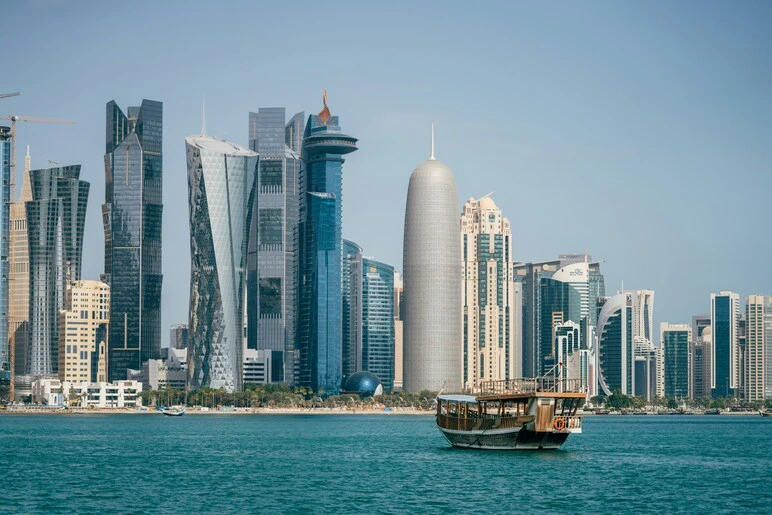
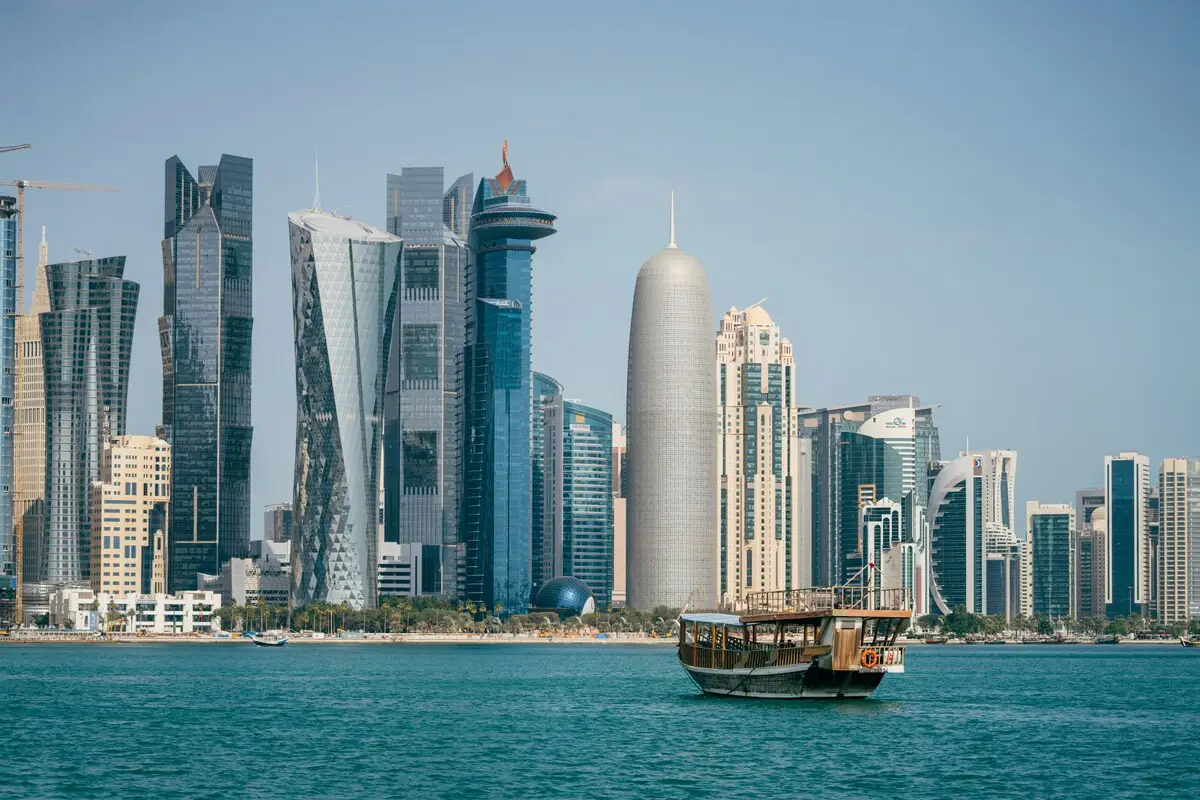
Qatar is a country that reveals itself in contrasts. In Doha, sculpted towers rise from the desert’s edge, their glass facades catching the Arabian sun by day and glowing softly against the Gulf after dusk. Beyond the skyline, sand drifts toward an inland sea, traditional dhow boats sway along the Corniche, and the call to prayer carries across the evening air.
Defining Qatar
It helps to understand that Qatar is beyond the gleaming image repeatedly projected abroad. Officially the State of Qatar, this sovereign peninsula extends into the Arabian Gulf. Arabic is the official language, though English moves easily through hotels, museums, and business districts. The local currency is the Qatari Riyal (QAR). And yet, beneath its modern infrastructure lies a society deeply guided by custom. Islamic traditions shape daily rhythms. Hospitality isn’t a performance but a cultural inheritance. The balance between continuity and change is deliberate — and distinctly Qatari.
Echoes of Qatar’s Past
Long before skyscrapers shaped the horizon, Qatar’s identity was tied to the sea and the desert. Pearl divers once descended into Gulf waters in search of treasures that connected the region to global trade networks. Inland, Bedouin tribes navigated vast dunes with resilience and precision, cultivating traditions of generosity that remain central to the nation’s character.
The discovery of oil in the twentieth century, followed by vast reserves of natural gas, marked a decisive shift. Economic transformation arrived swiftly, reshaping Doha into a capital of cultural institutions and architectural ambition. Yet fragments of earlier eras remain gently intact. In Souq Waqif, alleyways echo with commerce much as they once did generations ago. Falconry continues as a living practice, not a curated display. Wooden dhows still trace the waterline at sunset.
Before you go, remember these
Qatar moves with a quiet sense of order. Understanding its social rhythms allows the experience to unfold more naturally.
Fridays hold particular religious significance, and during Ramadan, the city adopts a softer daytime tempo. Public eating and drinking during fasting hours is discouraged, though evenings come alive with shared meals and extended gatherings.
Public dress leans conservative, and modesty is appreciated in shared spaces. Lightweight fabrics that cover shoulders and knees are advisable for both men and women, particularly in markets, museums, and government areas. In hotels and private beach clubs, the atmosphere relaxes, but outside them, discretion remains the norm. Visiting mosques, for example, requires more conservative attire.
Most establishments accept international credit cards, though small vendors and market stalls may prefer cash. ATMs are readily available across the city. A few Arabic phrases — As-salamu alaykum (hello), Shukran (thank you) — are received with warmth.

Landing in Qatar
Most international travellers arrive via Hamad International Airport, a sleek, design-forward gateway consistently ranked among the world’s finest. Set just east of central Doha along the Gulf shoreline, the airport sits approximately 20-30 minutes from the city’s main districts, making the transition from runway to skyline remarkably swift.
Inside, vast light-filled halls, curated art installations, and intuitive signage set a calm tone after long-haul journeys. Immigration procedures are typically efficient, and baggage reclaim rarely lingers.
Reaching the city is straightforward. The Doha Metro’s Red Line connects the airport directly to key stops, including West Bay and Msheireb, for a clean, air-conditioned route into town. Those seeking door-to-door ease can opt for Karwa taxis just outside arrivals with regulated fares, while ride-hailing services such as Uber operate seamlessly across the capital. Many luxury hotels also arrange private transfers.
Staying connected with SIM cards and essential apps
Connectivity in Qatar is refreshingly seamless. SIM cards from Ooredoo and Vodafone Qatar are available immediately upon landing at Hamad International Airport. Both have strong nationwide coverage, whether you’re navigating coastal highways, desert landscapes, or cultural districts. eSIM options are widely supported for added ease.
Wi-Fi is common in hotels, cafés, and public spaces, but reliable mobile data allows for spontaneous detours, such as sunset drives and last-minute dinner reservations.
A few essential apps enhance ease across the country:
1. Doha Metro & Lusail Tram App – routes and schedules
2. Google Maps – accurate for driving navigation
3. Karwa Taxi App – for official taxis
4. Talabat – widely used for food delivery
5. Uber – reliable for urban and intercity rides
Getting around Qatar
The working week runs Sunday through Thursday. Fridays are reserved for communal prayer, and many businesses pause operations around midday before reopening later in the afternoon. Planning around this rhythm makes navigating the city smoother.
Movement around, nonetheless, is straightforward. Karwa taxis (Doha’s official fleet) operate on metered fares and are reliable throughout the day. Ride-hailing services such as Uber and Careem are widely used and usually the most seamless option for visitors.
Public transport continues to expand across the country. The Doha Metro and Lusail Tram systems operate with contactless travel cards, purchasable at stations for unlimited travel and easily topped up. While rail connections primarily serve the capital and Lusail, Qatar’s well-maintained road network makes taxis and ride-hailing services the most flexible way to move between regions.
For longer excursions such as desert safaris, coastal escapes, or visits to heritage towns, opt for private drivers or guided transfers arranged through hotels. Given the climate, stepping into a waiting air-conditioned vehicle is less indulgence and more intelligent planning.
Doha neighbourhoods to consider
Where you choose to stay will shape your understanding of Doha.
West Bay is the city at its most vertical — a sweep of glass towers curving along the Corniche, where mornings begin with sea views and evenings glow in reflected light. It’s a natural choice for first-timers who want proximity to major museums, waterfront walks, and polished hotel dining rooms.
For something more textured, Msheireb Downtown Doha embodies a different rhythm. Built with a contemporary interpretation of traditional Qatari architecture, its shaded walkways, intimate plazas, and low-rise facades feel deliberate. Museums, cafés, and design-forward boutiques are woven into the district, making it one of the city’s most walkable quarters.
Further north, The Pearl-Qatar trades desert minimalism for Mediterranean mood. Marinas filled with yachts, pastel-toned façades, and café-lined promenades create a resort-like atmosphere that appeals to travellers drawn to waterfront leisure.
Tasting authentic Qatar
In Qatar, dining is rarely rushed. It’s an extension of hospitality itself. Qatar’s culinary landscape reflects its geography: shaped by the sea, the desert, and centuries of exchange.
Yet Doha’s dining scene has expanded far beyond its roots. International chefs have established refined outposts here, and recognition from the MICHELIN Guide signals the city’s emergence as a serious gastronomic destination. Tasting menus unfold in architectural dining rooms overlooking the Gulf; contemporary Middle Eastern concepts reinterpret regional classics with restraint and precision.
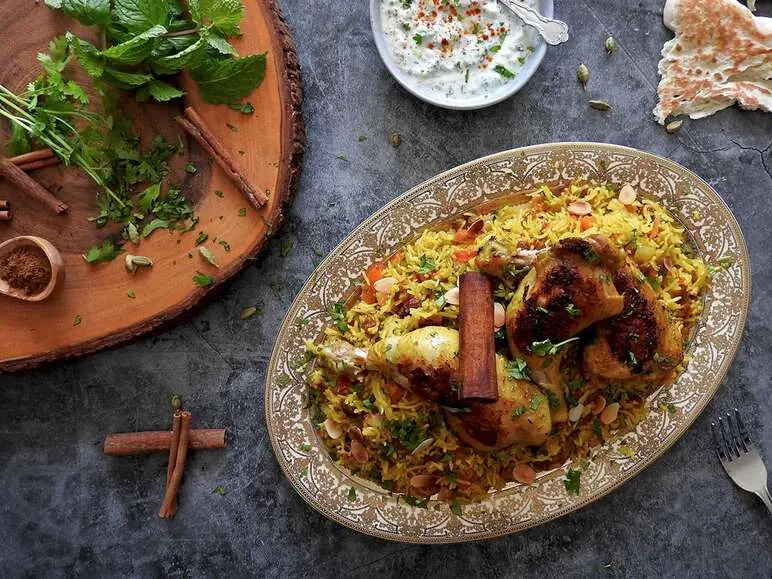
Here are some must-try local specialities:
1. Arabic coffee (Gahwa) with dates: Lightly roasted, cardamom-infused coffee poured in small cups and served with fresh dates.
2. Balaleet: Sweet vermicelli scented with rose water and cardamom, crowned with a thin savoury omelette, is a beloved breakfast staple.
3. Harees: Slow-cooked wheat and meat blended into a velvety, almost risotto-like consistency, traditionally served during Ramadan and celebrations.
4. Luqaimat: Crisp golden dumplings drizzled with date syrup, lightly crunchy outside and airy within.
5. Machboos: Fragrant spiced rice layered with tender lamb, chicken, or seafood, infused with dried lime and cardamom.
6. Madrouba: Creamy, gently spiced rice cooked with chicken or fish until thick and unified in texture.
7. Thareed: Tender stewed meat and vegetables spooned over thin flatbread, allowing the rich broth to soak through every layer.
What to buy in Qatar
Qatar’s shopping scene blends heritage craftsmanship with polished luxury. From desert-inspired keepsakes to refined edible gifts, these are the pieces worth slipping into your suitcase:
1. Arabic coffee sets: Elegant dallah (traditional coffee pots) paired with delicate finjan cups, a refined reminder of Qatari hospitality.
2. Dates sweets: Premium local dates — frequently stuffed with nuts or dipped in chocolate — beautifully boxed and ideal for gifting.
3. Falcon-themed keepsakes: Sculptures, artwork, or miniature replicas celebrating the national bird and a cherished cultural tradition.
4. Handwoven textiles and pashminas: Lightweight shawls and scarves in desert tones, often found in traditional markets.
5. Luxury fashion and watches: High-end boutiques and designer labels housed within Qatar’s architecturally striking malls.
6. Oud and bakhoor: Deep, resinous fragrances and incense burners that capture the Gulf’s signature scent.
7. Pearl jewellery: A nod to Qatar’s pearling heritage, from minimalist modern designs to classic strands.
8. Spices and saffron: Fragrant blends, dried limes (loomi), and high-quality saffron sourced from traditional souqs.
5 iconic sites to visit in Qatar
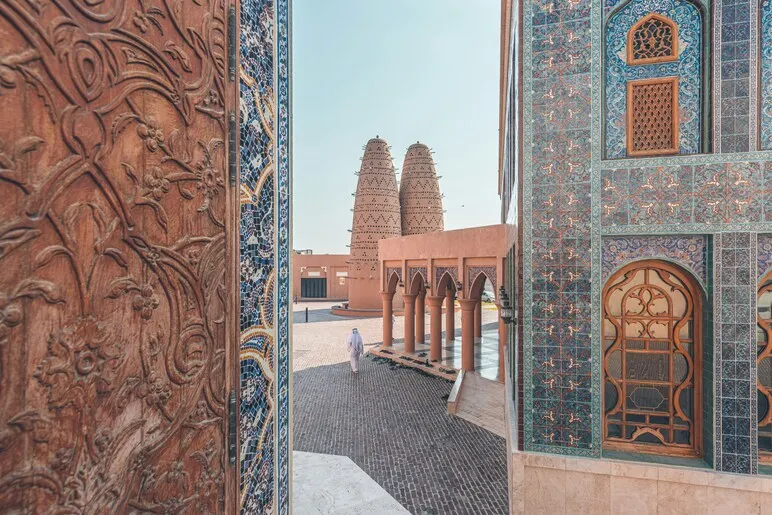
Qatar doesn’t overwhelm with excess. It reveals itself gradually in the geometry of its museums, the stillness of its desert, the ritual of shared coffee, and the hush before sunset over the Gulf.
Katara Cultural Village
Between West Bay’s towers and The Pearl’s marina lies this waterfront enclave devoted to performance, architecture, and public art. An amphitheatre in classical form overlooks the sea; two intricately designed mosques stand nearby, tiled and luminous. Galleries, theatres, cafés, and a beachfront weave together without urgency. It is a place designed less for spectacle than for gathering — where culture unfolds in open air, and the skyline remains just distant enough to feel like backdrop rather than centre stage.
Khor Al Adaid (Inland Sea)
South of Doha, the city recedes quickly. Sand dunes begin to gather, rising and collapsing in sculptural waves. A four-wheel-drive journey across this terrain feels less like an excursion and more like a recalibration. Eventually, the dunes spill into Khor Al Adaid, the Inland Sea, where tidal waters press against desert slopes. Between November and April, greater flamingos gather along the shoreline, their silhouettes fragile against the vastness.
Museum of Islamic Art
Doha’s cultural ascent has been swift, but it is anything but superficial. The Museum of Islamic Art, poised on its own peninsula, anchors the waterfront with geometric clarity. Inside, centuries of calligraphy, ceramics, and textiles trace artistic dialogues across continents.
Souq Waqif
Restored but not overly polished, the marketplace hums with the theatre of daily life. Think spice merchants arranging saffron in shallow bowls, tailors measuring bolts of fabric, café tables filling as dusk settles. Shops spill over with handwoven textiles, oud perfumes, ceramics, and delicately worked daggers whose craftsmanship feels rooted in another era. Nearby, the Falcon Souq pays homage to a tradition still revered; hooded birds perch calmly as owners discuss lineage and training with quiet pride.
The Pearl
North of central Doha, The Pearl-Qatar evokes a different tempo where the marina promenades are edged with cafés, and yachts are swaying lightly against polished docks. Porto Arabia curves around the waterfront in pastel restraint, while Qanat Quartier borrows Venetian flourishes: arcades, bridges, canals catching late-afternoon light.
Honourable mention: Sail at sunset!
Along the Corniche, traditional wooden dhows wait patiently against the quay. As the sun lowers, the skyline begins to shimmer, towers softening into silhouette. Boarding a dhow at this hour feels instinctive. The boat glides slowly across the Gulf as city lights gather strength, reflections fracturing gently across the water.
When is the best time to visit Qatar?
The best time to explore Qatar is during the cooler months, from November to March, when the desert air softens, and outdoor life returns in full. Days are comfortably warm, evenings are crisp, and conditions are ideal for dune drives at Khor Al Adaid, waterfront strolls, open-air dining, and cultural festivals. This is when Qatar feels most expansive!
April and early May remain pleasant, though temperatures begin to climb. By summer (June–September), heat intensifies dramatically, often exceeding 40°C, with high humidity along the coast. Outdoor exploration shifts to early mornings and after sunset, while much of daily life moves indoors to museums, galleries, and air-conditioned malls. The advantage? Fewer crowds and attractive hotel rates.
Winter also brings major national moments, including Qatar National Day on 18th December, when celebrations, parades, and fireworks animate the skyline. Meanwhile, Ramadan — which shifts annually according to the Islamic calendar — is a unique cultural rhythm, with serene daytime hours and lively evenings marked by iftar gatherings and night markets.
Pro Tip: Pack breathable fabrics for the day, a light layer for cooler evenings between December and February, and sunglasses year-round — the desert sun is radiant in every season.