

 Mirella Pandjaitan
 Jul 27, 2026
Few destinations reward storytellers quite like Indonesia.
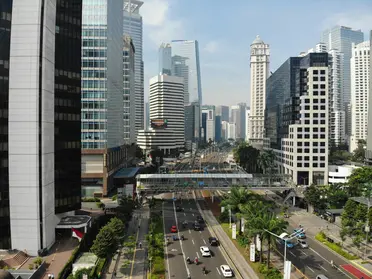
Bali's emerald rice terraces, Jakarta's ever-evolving skyline, Java’s volcanic peaks, and Raja Ampat’s crystalline waters make this archipelago inspirational for photographers, filmmakers, journalists, and digital creators from around the world. Every island tells a different story waiting to be told—whether through a documentary lens, an editorial feature, or a beautifully curated Instagram reel.
As content creation has evolved from a passion into a profession, Indonesia's immigration regulations have evolved alongside it.
The distinction has become increasingly important as luxury hotels, tourism boards, lifestyle brands, and independent creators collaborate more frequently than ever. What was once a holiday captured on camera has grown into a global creative industry, making the right visa just as essential as the equipment you pack.
If your visit involves filming a documentary, conducting interviews, producing editorial features, or collaborating with brands on commercial content, understanding which visa applies to your work is an important part of planning your journey.
Indonesia currently offers two dedicated visa categories for foreign creators: the C5 Journalist Visa and the C5A Content Creator Visa. While they may sound similar, each is designed for a different type of creative work.
Before packing your gear
Many visitors assume that documenting their travels automatically falls under a tourist visa. Capturing holiday memories for personal use is generally considered part of the travel experience, yet professional content production is viewed differently under Indonesian immigration regulations.
That could be working with a tourism board, photographing a luxury resort, filming a documentary, conducting interviews, or producing branded social media campaigns; the purpose of your visit—not simply the gear you're carrying—determines which visa you should apply for.
Indonesia's dedicated visa pathways recognise the growing diversity of modern storytelling, offering separate categories for editorial journalism and commercial content creation.
For journalists and documentary storytellers
The Single Entry Journalist Visa (Index C5) is intended for foreign media professionals undertaking editorial and journalistic assignments in Indonesia. It’s designed for individuals representing newspapers, broadcasting networks, television stations, digital news platforms, documentary production companies, and other recognised media organisations or editorial projects with the appropriate sponsorship.
The visa permits a range of professional activities, including news reporting, documentary filmmaking, feature writing, editorial photography and videography, interviews, and coverage of cultural, business, sporting, and international events.
For those documenting Indonesia through an editorial lens, the C5 Visa provides the appropriate legal framework to report, investigate, and tell stories while temporarily working in the country. The rise of digital platforms, however, has introduced another generation of storytellers—those whose work centres around social media, commercial campaigns, and branded collaborations.
For influencers and commercial creators
Recognising the rapid growth of the creator economy, Indonesia introduced the C5A Content Creator Visa to accommodate influencers, digital creators, photographers, videographers, and social media professionals producing commercial content during their stay.
The visa is generally intended for creators collaborating with hotels, tourism boards, restaurants, lifestyle brands, and other commercial partners. Sponsored stays, destination campaigns, promotional photography, branded videos, and social media collaborations typically fall within this category.
As the lines between travel and content creation continue to blur, the C5A Visa provides creators with an appropriate immigration pathway that reflects the increasingly professional nature of the industry.
Choosing between the C5 and C5A

While both visas are designed for professional creators, the distinction ultimately comes down to the purpose of your work.
If your visit revolves around editorial journalism—reporting for a newspaper or magazine, producing a documentary, conducting interviews, or covering an event for a recognised media organisation—the C5 Journalist Visa is generally the appropriate category.
If, instead, you're travelling to create commercial or promotional content, such as collaborating with luxury hotels, tourism boards, restaurants, fashion labels, or lifestyle brands for sponsored campaigns, social media content, or commercial photography and videography, the C5A Content Creator Visa is likely the more suitable option.
Creators whose work spans multiple disciplines are encouraged to review the scope of the project before applying. The deciding factor isn’t necessarily the platform it’s published on but the purpose of the content and the nature of activities while in Indonesia.
Planning a longer creative project?
Both the C5 and C5A visas are designed with extended productions and editorial assignments in mind. Successful applicants are granted an initial stay of 60 days, with the option to extend twice for an additional 60 days each time, allowing a maximum stay of 180 days without leaving Indonesia.
Both visas are issued as single-entry visas, meaning they become invalid once you depart Indonesia. If you plan to return for another assignment or campaign, a new visa application will be required. Once approved, the visa must generally be activated within 90 days of issuance.
Applying for the visa
Applications for both the C5 and C5A visas are submitted electronically through Indonesia's immigration system and generally require sponsorship from an Indonesian organisation or authorised sponsor.
While requirements may vary depending on the visa category and the nature of your project, applicants are typically asked to prepare:
- A passport with the required validity period
- A recent passport-sized colour photograph
- Supporting documents relating to the project or assignment
- Sponsorship documents from an Indonesian organisation or authorised sponsor
- For C5 Journalist Visa applicants, press credentials, together with an invitation letter or official information outlining the planned media coverage
Depending on your assignment and individual circumstances, Indonesian immigration authorities may request additional supporting documents during the application process.
Why choosing the right visa matters
Indonesia continues to welcome storytellers who share its landscapes, culture, cuisine, hospitality, and communities with audiences around the world.
Choosing the appropriate visa is more than an administrative requirement. It allows creators to work confidently with local partners, conduct interviews, attend events, and carry out professional projects while remaining aligned with Indonesia's immigration regulations.
With the country's creative and tourism industries continuing to flourish, understanding the distinction between editorial journalism and commercial content creation helps ensure every collaboration begins on the right footing.