


 Mirella Pandjaitan
 Feb 18, 2026
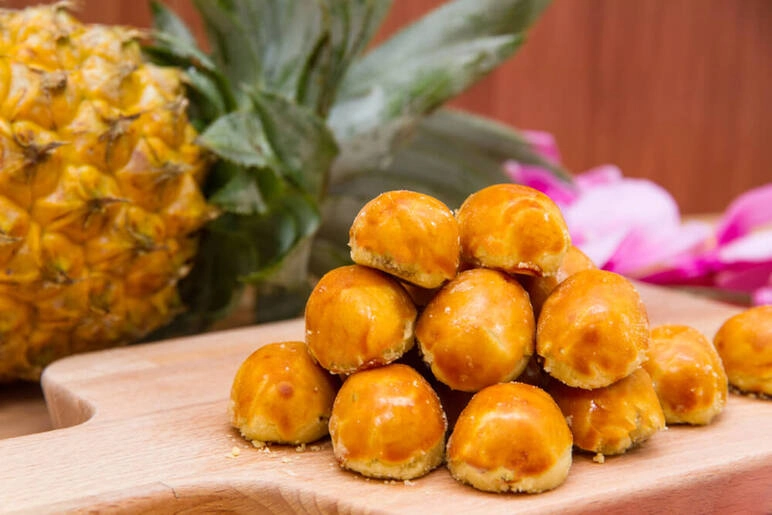
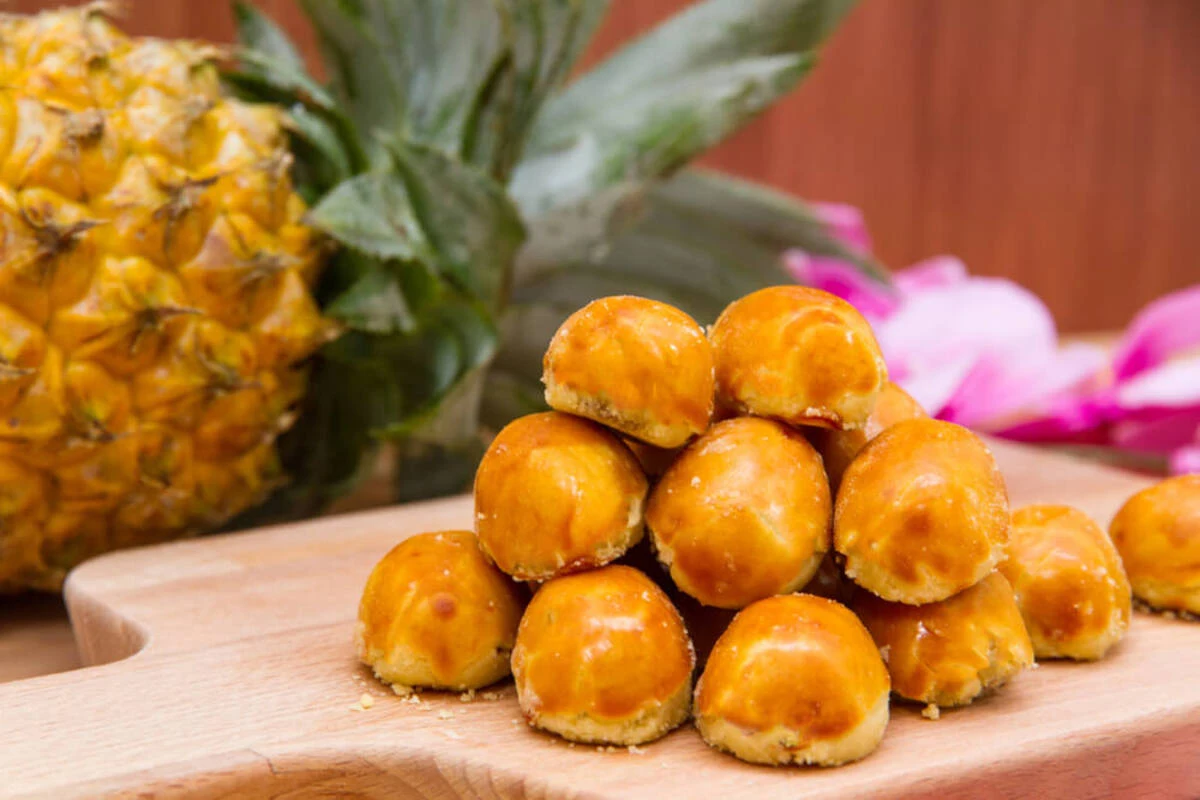
Nastar has a way of seducing a room. One bite of those petite, burnished orbs with their molten heart of pineapple and you understand the devotion.
Calories aside, nastar remains the undisputed darling of the festive table. Its tender, butter-rich crumb yields ever so slightly, fragile at the edges, giving way to a filling that is lush, bright, and gently tart. When executed flawlessly, it dissolves on the tongue — the kind of melt that feels almost couture. Or as the younger set might say, it “bursts” in the mouth.
The Dutch brought nastar to Indonesia
The name itself is a linguistic heirloom, derived from the Dutch "ananas" (pineapple) and "taartjes" (little tarts), softened over time into the more melodic “nastar.” In English, it slips easily into pineapple tarts or pineapple nastar rolls. The pastry dates back to the Dutch colonial era, when European baking traditions found new expression in the tropics.
Originally inspired by Dutch-style pies filled with blueberry or apple, the recipe evolved out of necessity. During colonial times, such fruits were scarce in the archipelago. Pineapple — abundant, fragrant, and perfectly balanced between sweet and sharp — became the natural substitute. Cooked down into a glossy jam, it was tucked into a buttery dough and baked until golden.
In its earliest incarnation, nastar was no everyday pleasure. It appeared only at grand government functions and was reserved for nobility and the priyayi class. A symbol of status, it was served sparingly, almost ceremonially.
Nastar is actually a cake
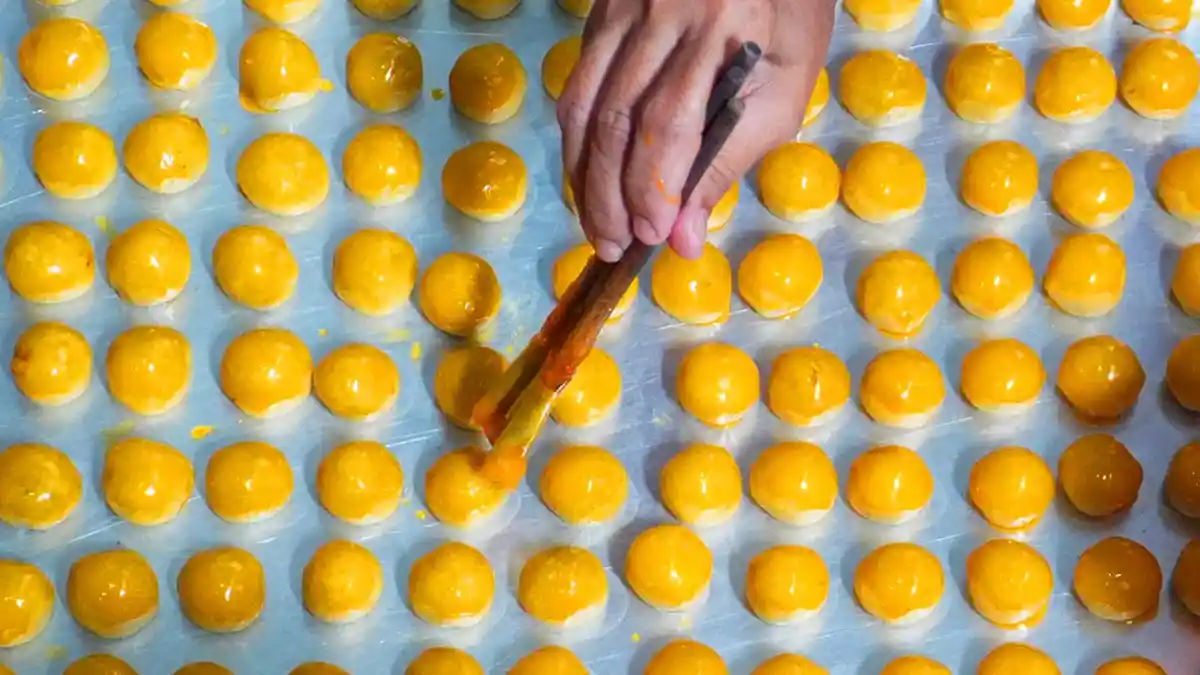
Despite being casually labelled a “kue kering”, nastar technically belongs to the cake family. Indonesian pastry authority Yongki Gunawan notes that its soft, moist texture sets it apart from the crisp snap of typical dry cookies. It is, in essence, a pineapple cake that is tender rather than brittle.
Becoming an Indonesian holiday tradition
Over time, the cookie — or rather, the cake — found its way into broader celebration. Alongside kastengel, lidah kucing, and putri salju, nastar reflects unmistakable Dutch influence, introduced at the turn of the 19th to 20th century as Indonesians grew acquainted with European confections. These pastries were traditionally prepared for Christmas among the Dutch, yet during Eid, they were also sent as gifts to indigenous aristocratic families. From that gracious exchange, a new tradition was born. Nastar became synonymous with Lebaran hospitality.
Nastar is a global favourite, too
Its appeal transcends borders. In Singapore and Malaysia, it appears as kuih tart nenas or pineapple tarts, often with subtle Portuguese influence in style and shape. Taiwan offers its own interpretation: fenglisu, one of the island’s most beloved souvenirs. Even Australia presents a distant cousin — the Neenish tart — occasionally filled with pineapple jam and crowned with passionfruit icing.
Nastar’s symbolism runs deeper still. Among the Chinese community, pineapple is known as ong lai, loosely translated as “golden pear,” and associated with prosperity, fortune, and abundance. To serve nastar, then, is to offer more than sweetness — it is to wish wealth and good luck upon your guests.
Today, innovation keeps the pastry relevant. Beyond its classic pineapple core, variations bloom — strawberry, blueberry, durian — and it graces tables not only during Eid, but also at Christmas and Lunar New Year celebrations.
Kampung Nastar exists in Tangerang
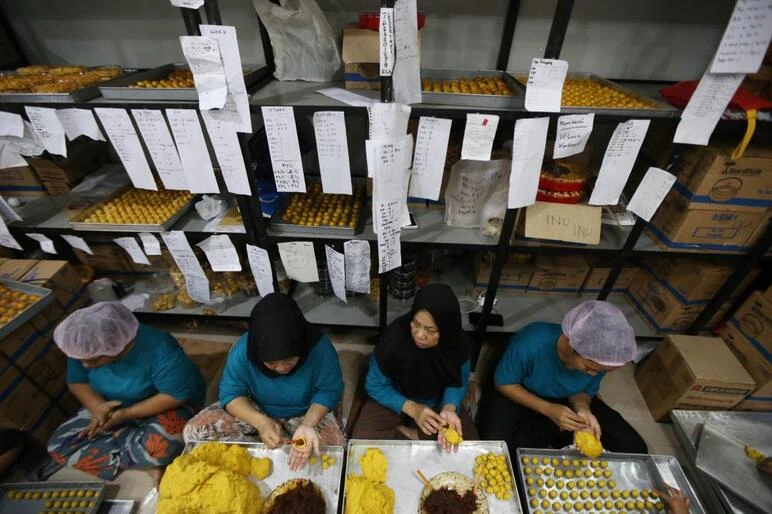
Nowhere is this devotion more palpable than in Kampung Nastar (Nastar Village), in Larangan Utara, Tangerang. Since 1987, a small stretch along Jalan Haji Unus, Gang Merpati has transformed into a legendary hub of production, where nearly every household joins the ritual, especially throughout Ramadan. A single home-based kitchen can produce over a thousand jars in a season.
The neighbourhood’s reputation has soared in recent years, with thousands of orders pouring in each Ramadan. Dozens of workers, largely women from the community, move in quiet choreography, mixing dough to meticulous packaging. More than an economic engine, Kampung Nastar has become a culinary destination, drawing media attention and buyers from across regions.
Officially named in 2023 at the initiative of Larangan Utara village head Iwan Bambang Subekti, the title was intended to elevate local potential into a defining icon of the district. The impact has been tangible: wider recognition, broader markets, and increased household income. Beyond nastar, residents now produce sixteen varieties of cookies, namely kastengel and sago cheese, unveiling new flavours each year.
In Larangan, nastar is no longer just a festive indulgence. It is legacy, livelihood, and a testament to how tradition can become both heritage and horizon.