

 Rani Permata
 Aug 24, 2026
delta force Delta Force Hawk Ops: Combat Tips That Actually Work in Season 9
Look, most Delta Force guides out there give you the same recycled advice. "Use cover." "Communicate with your team." Thanks, very helpful.
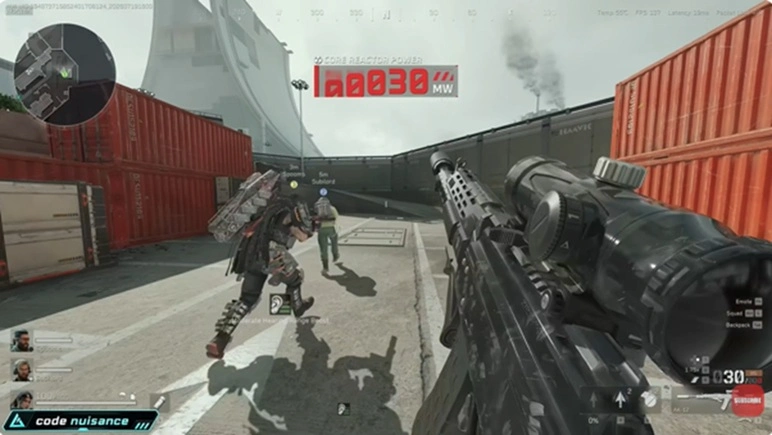
But here's the thing. Hawk Ops plays differently from anything else on the market right now. It's not quite Battlefield, not quite Tarkov, and definitely not COD—despite borrowing DNA from all three.
So whether you're getting melted in Havoc Warfare or losing precious loot in Operations, this guide covers what actually matters. Updated for Season 9 Echo, including the recent "No Half-Time" balance patch that reworked objective capture zones and redeploy positions.
Let's get into it.
First Things First: Understand What You're Playing
Hawk Ops isn't one game. It's at least two very different experiences sharing the same client.
Havoc Warfare throws 64 players into large-scale battles with vehicles, ticket systems, and objective chains. Think D-Day on Ascension's beach, pushing uphill into entrenched defenders.
Operations is the extraction mode. You load in with your gear, loot what you can, fight (or avoid) other players and AI, then extract. Die and you lose everything you brought.
The combat fundamentals overlap, but the mindset is completely different. Warfare rewards aggression and objective focus. Operations rewards restraint and knowing when to leave.
The Basics That Most Players Skip
Before chasing kills, spend 30 minutes in the Firing Range at Black Site. Seriously. The attachment calibration system in Hawk Ops is deeper than most players realize, and the Firing Range lets you test every optic, grip, and barrel combination without consequences.
Pick one weapon and stick with it. The M4A1 remains the safest choice heading into Season 9. It has a 672 RPM fire rate, manageable recoil, and an attachment tree so deep you'll still be unlocking things at level 70. Nearly every weapon tier list this season still puts it at S-tier for a reason.
Now, about that time-to-kill. It's incredibly fast. Faster than you expect if you're coming from other shooters. Two or three bullets to the head and you're done. That speed punishes one mistake above all others: being in the open.
Every death in Hawk Ops should prompt one question. "Was I exposed?" Nine times out of ten, the answer is yes.
Intermediate Moves That Separate You From the Pack
Once the basics click, it's time to start thinking about how you fight, not just whether you fight.
Lean Into Leaning
Q and E on PC let you lean left and right while crouched or prone. Most beginners forget this exists entirely. Combined with "wiggle shooting"—strafing side to side while peeking a corner—leaning makes you dramatically harder to hit while keeping your crosshair stable.
The trick is slicing angles. Don't wide-peek around corners. Lean first, expose as little of your body as possible, and pre-aim where enemies typically sit.
Stop Spraying Full-Auto at Range
Trigger discipline wins more gunfights than perfect aim. Tap-fire or short bursts at anything beyond 30 meters. Full-auto dumps your recoil ceiling and burns ammo you might desperately need later—especially in Operations where every round counts.
Use Smoke Grenades (Really)
Smoke is the most underrated utility in Havoc Warfare. Attacking an objective with an open approach? Smoke it. Reviving a teammate in a crossfire? Smoke it. Rotating between buildings while a sniper watches from a rooftop? You guessed it.
Most intermediate players carry frags exclusively. But a well-placed smoke creates opportunities that a frag never will.
Vehicles Aren't Optional in Warfare
On maps like Ascension—where attackers push from a beach landing up a mountain—vehicles are how you break stalemates. Use them to absorb fire and create chaos while infantry follows into buildings. A coordinated vehicle push with even two squad members changes the entire dynamic of a choke point.
Advanced Tips for Players Who Want to Dominate
This is where things get nuanced.
Sound Is Your Best Weapon
Turn off the in-game music. Right now. Gunshots in Operations carry up to 500 meters, and footsteps reveal enemy positions before you ever see them. Walking (caps-lock) instead of sprinting near POIs is the difference between ambushing someone and getting ambushed yourself.
Advanced players also manipulate sound deliberately. Close doors behind you when rotating to hide your trail. Fire a suppressed weapon from one angle, then reposition before the enemy investigates. These micro-decisions stack up over a match.
Read the Battlefield, Don't Just React To It
Hearing gunshots northeast? Don't sprint toward them immediately. Wait 30–60 seconds. Let two squads weaken each other. Then push the survivors while they're healing and looting. Third-partying is powerful, but patient third-partying is devastating.
In Warfare, track the ticket count and timer. When your team's tickets are low, switch from aggressive flanking to conservative objective defense. When you're behind, that's actually when aggressive flanks pay off most—the enemy gets complacent holding leads.
Season 9 Meta Weapons Worth Knowing
Beyond the ever-reliable M4A1, Season 9 Echo introduced the AR57 assault rifle and M82 sniper rifle. The AR57 is shaping up as a fast-handling alternative for players who want a slightly different feel than the M4A1 without sacrificing stability. The M82 fills the heavy sniper role for anchoring long sightlines on Warfare maps.
For aggressive CQB players, the MK4 and SMG-45 remain top picks. In Operations specifically, the M7 earns respect for its balance of accuracy and survivability in mid-range extraction fights.
Attachment-wise, prioritize recoil-stabilizing grips, a clean 2x–3x optic for versatility, and a suppressor. The suppressor reduces both your audio signature and muzzle flash—two things that get you killed far more often than you'd think.
Optimize Your Settings for Combat, Not Just FPS
This gets overlooked constantly. Your settings directly affect how well your mechanics translate into results.
Run fullscreen mode with your highest refresh rate. Turn V-Sync off. Disable motion blur and depth of field completely—they look cinematic but smear your vision during fast fights. Enable Nvidia Reflex if you have a compatible GPU; the input lag reduction is noticeable.
For sensitivity, start around 800 DPI with in-game sensitivity between 5–8. The critical part isn't finding the "perfect" number. It's picking one and sticking with it for weeks so your muscle memory actually develops.
Higher FPS and lower input lag don't just make the game smoother. They make your flick shots land, your recoil pulls more consistent, and your peeks tighter. That's not theoretical—it's mechanical reality.
One More Thing
Some players go beyond in-game settings and look into external tools to gain an advantage. If you're curious about what's available, Battlelog covers the current landscape of Delta Force cheats including detailed breakdowns of features like aimbot and ESP.
But regardless of what tools or approach you choose, the fundamentals outlined above are what separate players who improve from players who plateau. Master your weapon, respect the TTK, use utility, and think before you peek.
Season 9 Echo is still evolving—the devs just reshuffled objective zones and respawn positions with the "No Half-Time" update, so map knowledge is a moving target. Stay current, adapt your routes, and treat every death as a lesson rather than a frustration.
That's genuinely how you get better at Hawk Ops.